




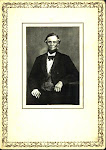
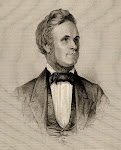


Soon after his father took land in Woodruff, Joseph gave up his business in Salt Lake City and prepared to join the family, though not before he met and married Ann Lydia West in May of 1873. He had been involved in several building projects in Salt Lake and Ogden, including the remodeling of the Salt Lake Theater.
The theater had been the gem of Salt Lake society since it was built with inspiration and money provided by Brigham Young in 1861. Dedicated in 1862, it had a capacity to seat 1,500 and provided entertainment to many through the years. But with increasing influence from outside entertainment and a desire to divest himself of controversy, Brigham Young sold the theater in 1873. Immediately the newly formed Salt Lake Theater Corporation began remodeling to bring the image of thee theater more in line with that of well-known theaters in the east. Chairs were upholstered, the balconies remodeled, new balcony boxes built, carpeting installed, the stage lowered, and the whole interior was made plush and elaborate. The new owners boasted that it would be “one of the first class theaters of the continent, in fact in general internal appearances and comfort, the new house will greatly resemble “Noblo’s” of New York.
It was expected that this interior facelift would be done during the Spring and Summer so the theater would be re-opened for the fall season. Joseph helped complete the project, contributing to the beauty of the details with his ability to think out a project. The family remembers that in discussing how to create some of the decorative effects found in fine theaters of the East, it was Joseph who came up with a new way to accomplish it. Although no records exist of thoise who did the work on the theater that summer, we know that the ornate top plates and decorations were created by Joseph’s ingenuity. He boiling horse and cow hides to extract the glue, combined it with clay or quick setting lime, and them poured it into a prepared forms. He was also a plasterer for the theater. Since the theater was the gem of Salt Lake for a total of 66 years, it seems his ideas were well conceived.
By the time Joseph arrived in Woodruff, James had been there for several months. But the first winter was enough for them. When James and Joseph found out that winter last nine months in Woodruff, that cattle freeze and grain and potatoes regularly are frost killed before they mature, they packed up and went back to Bountiful. During those first years in Woodruff, it seems more and ore people became a testament of a family’s endurance if they could make a living and be happy in Woodruff. James had gardening in his blood, and couldn’t endure the fact that the best crops in Woodruff are sagebrush and mosquitoes. He became a respected brick mason in Bountiful and was known as one of Bountiful’s leading gardeners. He and Alice died there, quite contented for many years provided his near and distant family with fruit and vegetables whenever they traveled from Woodruff to Salt Lake.
Joseph on the other hand, couldn’t be content in Bountiful wither. After three years he moved his family to Ogden and worked in the building trade until 1882. There he became an excellent brick maker, a trade he put to good use the rest of his life. In fact, one of the first things he did after learning that the brick making trade was to find a spot where he could begin making bricks himself. Joseph found that there was building going on everywhere in Utah. He could have worked anywhere; but he as time went on, apparently he began to long for his family.
Soon Joseph and Ann joined the family in Woodruff where he opened a blacksmith shop and in 1884 a brickyard which was about one-half mile east of town. This brick kiln turned out the thousands of bricks which went into the new Chapel, Bryon Sessions’ brick house, and later the school. It was Joseph who supervised the church building project, beginning on January 14, 1895 and completed August 1897.
Somehow Joseph had the energy to take on the contract to build the Woodruff School building on Main Street across from the church which was also being built. He agreed to finish the school in 250 days. It was a superhuman task to complete both projects at once. No doubt with the help of his productive family, Joseph became a powerful factor in the building up of Rich County.
There is one additional thing Joseph took on during this period, which almost boggles the mind. Perhaps his invertible productivity was due in part to his unflinching determination to serve the Lord wherever and whenever he was asked. Between the Courthouse project and the Church project he was called on a mission to the Sandwich Islands (Hawaii). As soon as he finished the last brick on the school he accepted another call to England. Before he was to leave, however, the mission call was changed by Byron Sessions who needed Joseph to help him colonize the Big Horn Country in Wyoming.
Joseph had already built the County Courthouse in Randolph. In May of 1888 the county accepted bids for the building of a new brick courthouse, and Joseph’s bid was accepted. In the period of only months Joseph completed the building, incorporation the changes of a higher foundation and also shutters in the bargain. He received $2,479.00 for his work, which was completed in November.
Likely because of his profile as a worker and a thinker, Joseph became County Surveyor, and began a project to survey the boundary of Rich County in 1897. Instructed to mark the boundary with cedar posts, Joseph worked on the project during his term in office, but it was no an undisputed boundary until 1952 when his nephew Joseph Fischer Neville was Rich Bounty Surveyor. Joseph Fisher Neville is the one who surveyed and plated into lots the cemetery while he was county surveyor in May 1911.
Saturday, October 27, 2012


Neville-Stiff: Second Generation-Joseph Hyrum Neville Comes to Woodruff
Soon after his father took land in Woodruff, Joseph gave up his business in Salt Lake City and prepared to join the family, though not before he met and married Ann Lydia West in May of 1873. He had been involved in several building projects in Salt Lake and Ogden, including the remodeling of the Salt Lake Theater.
The theater had been the gem of Salt Lake society since it was built with inspiration and money provided by Brigham Young in 1861. Dedicated in 1862, it had a capacity to seat 1,500 and provided entertainment to many through the years. But with increasing influence from outside entertainment and a desire to divest himself of controversy, Brigham Young sold the theater in 1873. Immediately the newly formed Salt Lake Theater Corporation began remodeling to bring the image of thee theater more in line with that of well-known theaters in the east. Chairs were upholstered, the balconies remodeled, new balcony boxes built, carpeting installed, the stage lowered, and the whole interior was made plush and elaborate. The new owners boasted that it would be “one of the first class theaters of the continent, in fact in general internal appearances and comfort, the new house will greatly resemble “Noblo’s” of New York.
It was expected that this interior facelift would be done during the Spring and Summer so the theater would be re-opened for the fall season. Joseph helped complete the project, contributing to the beauty of the details with his ability to think out a project. The family remembers that in discussing how to create some of the decorative effects found in fine theaters of the East, it was Joseph who came up with a new way to accomplish it. Although no records exist of thoise who did the work on the theater that summer, we know that the ornate top plates and decorations were created by Joseph’s ingenuity. He boiling horse and cow hides to extract the glue, combined it with clay or quick setting lime, and them poured it into a prepared forms. He was also a plasterer for the theater. Since the theater was the gem of Salt Lake for a total of 66 years, it seems his ideas were well conceived.
By the time Joseph arrived in Woodruff, James had been there for several months. But the first winter was enough for them. When James and Joseph found out that winter last nine months in Woodruff, that cattle freeze and grain and potatoes regularly are frost killed before they mature, they packed up and went back to Bountiful. During those first years in Woodruff, it seems more and ore people became a testament of a family’s endurance if they could make a living and be happy in Woodruff. James had gardening in his blood, and couldn’t endure the fact that the best crops in Woodruff are sagebrush and mosquitoes. He became a respected brick mason in Bountiful and was known as one of Bountiful’s leading gardeners. He and Alice died there, quite contented for many years provided his near and distant family with fruit and vegetables whenever they traveled from Woodruff to Salt Lake.
Joseph on the other hand, couldn’t be content in Bountiful wither. After three years he moved his family to Ogden and worked in the building trade until 1882. There he became an excellent brick maker, a trade he put to good use the rest of his life. In fact, one of the first things he did after learning that the brick making trade was to find a spot where he could begin making bricks himself. Joseph found that there was building going on everywhere in Utah. He could have worked anywhere; but he as time went on, apparently he began to long for his family.
Soon Joseph and Ann joined the family in Woodruff where he opened a blacksmith shop and in 1884 a brickyard which was about one-half mile east of town. This brick kiln turned out the thousands of bricks which went into the new Chapel, Bryon Sessions’ brick house, and later the school. It was Joseph who supervised the church building project, beginning on January 14, 1895 and completed August 1897.
Somehow Joseph had the energy to take on the contract to build the Woodruff School building on Main Street across from the church which was also being built. He agreed to finish the school in 250 days. It was a superhuman task to complete both projects at once. No doubt with the help of his productive family, Joseph became a powerful factor in the building up of Rich County.
There is one additional thing Joseph took on during this period, which almost boggles the mind. Perhaps his invertible productivity was due in part to his unflinching determination to serve the Lord wherever and whenever he was asked. Between the Courthouse project and the Church project he was called on a mission to the Sandwich Islands (Hawaii). As soon as he finished the last brick on the school he accepted another call to England. Before he was to leave, however, the mission call was changed by Byron Sessions who needed Joseph to help him colonize the Big Horn Country in Wyoming.
Joseph had already built the County Courthouse in Randolph. In May of 1888 the county accepted bids for the building of a new brick courthouse, and Joseph’s bid was accepted. In the period of only months Joseph completed the building, incorporation the changes of a higher foundation and also shutters in the bargain. He received $2,479.00 for his work, which was completed in November.
Likely because of his profile as a worker and a thinker, Joseph became County Surveyor, and began a project to survey the boundary of Rich County in 1897. Instructed to mark the boundary with cedar posts, Joseph worked on the project during his term in office, but it was no an undisputed boundary until 1952 when his nephew Joseph Fischer Neville was Rich Bounty Surveyor. Joseph Fisher Neville is the one who surveyed and plated into lots the cemetery while he was county surveyor in May 1911.
The theater had been the gem of Salt Lake society since it was built with inspiration and money provided by Brigham Young in 1861. Dedicated in 1862, it had a capacity to seat 1,500 and provided entertainment to many through the years. But with increasing influence from outside entertainment and a desire to divest himself of controversy, Brigham Young sold the theater in 1873. Immediately the newly formed Salt Lake Theater Corporation began remodeling to bring the image of thee theater more in line with that of well-known theaters in the east. Chairs were upholstered, the balconies remodeled, new balcony boxes built, carpeting installed, the stage lowered, and the whole interior was made plush and elaborate. The new owners boasted that it would be “one of the first class theaters of the continent, in fact in general internal appearances and comfort, the new house will greatly resemble “Noblo’s” of New York.
It was expected that this interior facelift would be done during the Spring and Summer so the theater would be re-opened for the fall season. Joseph helped complete the project, contributing to the beauty of the details with his ability to think out a project. The family remembers that in discussing how to create some of the decorative effects found in fine theaters of the East, it was Joseph who came up with a new way to accomplish it. Although no records exist of thoise who did the work on the theater that summer, we know that the ornate top plates and decorations were created by Joseph’s ingenuity. He boiling horse and cow hides to extract the glue, combined it with clay or quick setting lime, and them poured it into a prepared forms. He was also a plasterer for the theater. Since the theater was the gem of Salt Lake for a total of 66 years, it seems his ideas were well conceived.
By the time Joseph arrived in Woodruff, James had been there for several months. But the first winter was enough for them. When James and Joseph found out that winter last nine months in Woodruff, that cattle freeze and grain and potatoes regularly are frost killed before they mature, they packed up and went back to Bountiful. During those first years in Woodruff, it seems more and ore people became a testament of a family’s endurance if they could make a living and be happy in Woodruff. James had gardening in his blood, and couldn’t endure the fact that the best crops in Woodruff are sagebrush and mosquitoes. He became a respected brick mason in Bountiful and was known as one of Bountiful’s leading gardeners. He and Alice died there, quite contented for many years provided his near and distant family with fruit and vegetables whenever they traveled from Woodruff to Salt Lake.
Joseph on the other hand, couldn’t be content in Bountiful wither. After three years he moved his family to Ogden and worked in the building trade until 1882. There he became an excellent brick maker, a trade he put to good use the rest of his life. In fact, one of the first things he did after learning that the brick making trade was to find a spot where he could begin making bricks himself. Joseph found that there was building going on everywhere in Utah. He could have worked anywhere; but he as time went on, apparently he began to long for his family.
Soon Joseph and Ann joined the family in Woodruff where he opened a blacksmith shop and in 1884 a brickyard which was about one-half mile east of town. This brick kiln turned out the thousands of bricks which went into the new Chapel, Bryon Sessions’ brick house, and later the school. It was Joseph who supervised the church building project, beginning on January 14, 1895 and completed August 1897.
Somehow Joseph had the energy to take on the contract to build the Woodruff School building on Main Street across from the church which was also being built. He agreed to finish the school in 250 days. It was a superhuman task to complete both projects at once. No doubt with the help of his productive family, Joseph became a powerful factor in the building up of Rich County.
There is one additional thing Joseph took on during this period, which almost boggles the mind. Perhaps his invertible productivity was due in part to his unflinching determination to serve the Lord wherever and whenever he was asked. Between the Courthouse project and the Church project he was called on a mission to the Sandwich Islands (Hawaii). As soon as he finished the last brick on the school he accepted another call to England. Before he was to leave, however, the mission call was changed by Byron Sessions who needed Joseph to help him colonize the Big Horn Country in Wyoming.
Joseph had already built the County Courthouse in Randolph. In May of 1888 the county accepted bids for the building of a new brick courthouse, and Joseph’s bid was accepted. In the period of only months Joseph completed the building, incorporation the changes of a higher foundation and also shutters in the bargain. He received $2,479.00 for his work, which was completed in November.
Likely because of his profile as a worker and a thinker, Joseph became County Surveyor, and began a project to survey the boundary of Rich County in 1897. Instructed to mark the boundary with cedar posts, Joseph worked on the project during his term in office, but it was no an undisputed boundary until 1952 when his nephew Joseph Fischer Neville was Rich Bounty Surveyor. Joseph Fisher Neville is the one who surveyed and plated into lots the cemetery while he was county surveyor in May 1911.
The Life of Joseph Hyrum Neville By his son, Leo Jennings Neville
Typed by his great grand daughter, Noel Neville Cardon November 2008
Joseph Hyrum Neville was named after the Prophet Joseph and his brother Hyrum. He was born in Bradley, Hampshire, England on 31 august 1852, being the tenth child of his father, William Stiff Neville and Rachael Jennings. He was raised from infancy in the Church of Jesus Christ of Latter-day Saints.
His father, William Stiff Neville, was a Deacon in the Church of England. When the Mormon elders entered his town, Grandfather made this remark,
“He would drive them out of town if they did no quote the scriptures right.”
On attending the first street meeting, Grandfather was converted.
At the age of sixteen, Father came to America with this father and mother and one brother, James Neville. They took the sailing ship Hudson, at the docks of London, England. It took them seven weeks to make the trip to New York. They stayed in New York for a year until they had a chance to go west with a Church company.
While in New York, Father and Uncle Jim worked in the building tyrade, learning plastering, brick laying, and carpentry.
They traveled by rail to Laramie, Wyoming, and then went the erest of the way by ox team, in the company of Captain Seely, to Salt lake City.
Living in Salt lake city, Father followed the building trade. He plastered the old Salt Lake Theatre. He was stumped when it came time to do the ornamental plastering and casting, and none of the other workmen could do it either. He asked a painter if he had any idea of a plastic, but he also didn’t know. This painter painted the picture of the Savior’s trial before Pilate, which is in the annex of the Salt lake Temple. That night Father dreamed how to make the plastic, and it worked. The formula was glue and flour; the glue being made from cow hides. He made the glue.
Father moved to Bountiful, Utah, lived there a short time, and then moved to Ogden, Utah. He stayed there and followed his trade whenever he could get the work.
When the railroad came into Ogden, he claimed that he built the grade through Echo Canyon with wheel barrow, pick and shovel. Also, with a post he propped up an overhanging rock that the wagon road went under. Even today, you can see the tradition carried on.
In Ogden, Father carried on with band playing that he started in Salt lake. He played the coronet. Ogden had a good Brass Band.
They put on a big celebration, when the rails got into the city. The men went up in the mountains, got out a lot of pine trees, and lined the main street on each side, as if they had been growing there for years, but the trees had no roots.
When they went to Promontory Point with the rails, Father was there with the band, saw the gold spike driven and afterwards the band played a number. They crowd was close to the engine and spike driving when the engineer tooted his whistle and shouted, “Look out, I am going to turn around.” The people started to run to make room for him to turn, when it dawned on them that the thing could not turn.
Father went out to t a little town twenty five miles north of Evanston, Wyoming, called Woodruff, Utah. He was taken up with the tall grass that covered miles of ground. While in England he got the impression that cattle and being a cowboy was the thing to do . I remember in my early days Father’s prayers would be something like this:
‘Father in Heaven, bless the cattle on the thousand hills.”
As far as I know, he never attained to his desires. His abilities and talents ran in the mechanical department. For example, I saw him drive out of the corral one of his own cattle, which he hadn’t seen for some time. I asked him why he drove out on certain cow, shaved the brand, and found that it had his brad. He then threw up both hands and said,
“I am through.”
He moved to Woodruff, Utah, with one horse and one ox hitched to a wagon with his belongings. On arriving there, he build a log house and lean-to on the west side of the house, it being partly a dugout. Grandfather and Grandmother came from Bountiful to live with them in this dugout. Grandfather died there on 9 September 1889, seven years before I was born.
Father was advised by the townspeople to put up a blacksmith shop, since he had had such a shop in Aspen, Wyoming in the camp of Parley Willey. I remember living there in the top of the shop; we had to climb a ladder to get in. While there, I saw a railroad car that was right in front of the shop that had caught on fire and had partly burned. It was loaded with plug tobacco and ammunition. The ammunition was destroyed, but the tobacco wasn‘t hurt much—it just evaporated. I heard that it was found in threshing machine jockey boxes and men’s houses.
Father did all of the blacksmithing that the town needed as well as shoeing their horses. He also did their surveying. That the learned by correspondence.
He made the brick and burned lime; built the homes of those who could afford it. He drew the plans for the school house and church and built them. He also built the court house in Randolph, Utah. I helped him on these, mostly carrying water to the workmen and running errands.
He was Justice of the Peace, tried several cases, married several people, and took charge of the execution of an 18 year old boy who lived in Salt lake City. The boy had become quite tough, getting into all kind of trouble and playing pranks. His parents either did not or could not train him, or he was just turned loose, as so many parents do. He tipped over a street vendor’s apple cart and the police tried to apprehend him and that made the boy try to get away. He saw a horse tied to a stake and took the horse. That made him a horse thief, and in those days, that made him subject to the punishment of death. The police rounded up a posse and went after him. The boy broke into a store, took guns and bullets, and food. They followed him into a shack, just north of Woodruff, about two miles, where they captured him. He was tried in Salt Lake City on the charge of stealing and of killing two policemen, and was sentenced to be shot at the scene of his capture. It being in the jurisdiction of the Justice of the Peace, Father had to take charge of the execution. He was the only one who knew which guns had the bullets in; he did the loading. When he went to pin the target on to the boy, he called on a doctor that was present to pin it over the heart, as he was not quite sure of the right location. This boy was a Catholic. The Priest or Father then came to the boy and said to him,
“My boy, be brave, for you will soon be in the arms of Jesus.”
The boy straightened up in his chair and stayed that was until the shots.
Father received a letter from Box B, from the Church, calling him on a mission to the Sandwich Islands. This was about 1898. He started to prepare for this calling. He was to take all of his family. A year later, it was changed to Great Britain. In 1900, it was changed to the Big Horn Country. I think that Byron Sessions told the President of the Church that he wanted him to go as he had so many qualities to build up a new country. He must have told the different things that he was good in, for the letter4 that Father got called to do the surveying of the canal.
We prepared the wagons of all who were going to the Big Horn as well as our own at the blacksmith shop. I have a picture of the same, showing us at work. Savanah Putman took the picture, then sold the camera to Father and I fell heir to taking the pictures. I don’t have any pictures that I took. I don’t think I had any luck.

We, the ones that were going from Woodruff, all gathered, just south and east of town, aboutin the morning of 24 April 1900. Brother Henry Cook took pictures of us as we left.
The following information was obtained from the diary of Joseph Hyrum Neville:
Landing in Camp with the Rest of the Companies, and at the Head of the Canal.
Father having come in late, a Mister Marshel, who lived at Lovell, was hired to survey the canal. Father was then assigned to be the official blacksmith, for the colony. He having the tools that he shipped to Bridger. He continued all summer till fall.
When the land had to be surveyed and the towns plotted, and the drawing of land and lots, so as no one would have favors, father did they surveying. He also surveyed the other towns and additions of Lovell, Burlington, and Penrose, besides the Roan Canal and enlargement of the same for the Lovell Canal.
As we had to build homes, preparing for winter, at this time many of the people wanted to go back to Utah. Apostle Woodruff came to see what he could do to help us to stay and finish the canal. He called a special meeting and fast till we got an answer from the Lord. The Burlington Railroad sent their head surveyor to get the Mormons to build their road from Toluca, seeing that we had finished six miles of canal in one season. We all felt that the Lord answered our prayers. All that could be were spared to go and work on the railroad while the rest stayed to build the houses.
Father was hired by Bishop Packard as Bookkeeper and Commissary Clerk, when the railroad went through Powell. After that job was finished, he became the United States land Commissioner, having his office in Garland, Wyoming, during the time the water was taken out on the Government Project of the Powell Flat. He located all of those farms. While surveying between Wyoming and Montana, he discovered a tract of land that the former surveyors had not plotted on their maps. So, he put up a flag and declared it to be annexed to the United States. He stayed there all night and felt like Columbus did when he staked the Land of America for his country. He reported it and got a citation.
He built the addition of the rock school house, an; also drew the plans for the cement block meeting house. He submitted two plans and the committee chose the one that would not e practical if they did not build it as planned. While Father was away during the construction of the building, they came to the roof and decided that they could not put on that kind and would not have the money to finish it the way that the plans called for, so it was changed and they got the roof on of another type that was not suited for that high sort of construction. Father was disappointed when he came home and found what they had done. He got me to help him up into the roof to see fi they had tied it in the way that kind should be done and found that it was so he felt that it would carry through. The plan called for a balcony, to help hold the high walls.
Father built Ira Waters’ store in Lovell. Jos. Hyrum Neville was Mayor of Byron. He was Deputy Assessor, and then became Assessor of the Big Horn County. He lived there during his term in Basin. He then ran for the House of Representatives in the State of Wyoming, and was elected. That was his last job.
Monday, June 4, 1900.Under this date, Elder Joseph H. Neville wrote as follows:
From the Shoshone Camp, Bighorn County Wyoming, we were organized last Sunday, May 127, 1900, as a branch of the Church of Jesus Christ of Latter-day Saints by Apostle Abram O. Woodruff, the brother of Byron Sessions, with the following officers:
Fred Kohler, President of branch, with James F berry as first counselor and Heber W. Perry as second counselor. Joseph H. Neville, Branch Clerk and Historian, Walter X. Pack, choir leader. George Easton, Superintendent of the Sunday School, with Wilder T. Hatch and Walter Graham as assistants. Alvin S. Despain as Secretary, Thomas Howard, President of the YMMIA, with Orin F Colvin and William Faucett as counselors, Brigham Lewis Tippets, Secretary. Lucy Grant, President of the Relief Society, with Ailda Dickson and Chloe Lee as counselors. Mrs. Mary L. Welsh as President of the YLMIA, with Patty Hatch as first and Birdie Graham as second counselor. Rebecca Taggart, Secretary, Sister May Christensen as assistant organist.
The Branch was called the Shoshone Branch. We are enjoying ourselves very much. We held the first Sunday School that was ever held on the banks of this river by our school. We number at this gathering 127 souls. I am the chaplain of the camp. There are two camps. I blow the coronet for all meetings. We meet twice a day, pray and sing. We hold our Sunday Schools and meetings every Sunday in a nice grove of trees and I must say we enjoy the Spirit of the Lord very much. I feel the Spirit of my mission. We are all united to the very last man and woman. I have never felt that I wanted to leave this place. If I go away to Bridger or any other place, I am anxious to return wagon and home with family and the Saints.”
Wednesday, October 31, 1899. Under this date Joseph H. Neville, branch clerk from Byron, Big Horn County Wyoming wrote:
We send you a statistical report of the Byron branch of the Church of Jesus Christ of Latter-day Saints. The membership includes 13 high priests, 35 Seventies, 27 Elders, 3 Priests, 4 Teachers, 35 Deacons. The total of souls all told in the colony is 675. Namely 325 in the Byron Branch, and 350 in the Shoshone branch. Three births have taken place, and two marriages, solemnized by Jessie W. Crosby Jr. There have been 7 baptisms.

We were in perfect organization in the branch until about two weeks ago, when President Byron Sessions organized the Shoshone branch, which left our former branch incomplete in its organization. But as soon as Elder Fred Kohler returns from Salt lake City, President Sessions will complete the organization of the branch. We have a city laid out at Byron, the same as “Owen” near Fort Bridger and nearly all the lots are taken and about 40 houses are being built. We will soon have a daily mail. About six miles of canal have been completed at a cost of $30,000, which is about one half of the entire cost and we will be able to irrigate 3000 acres of land in the spring. The health of the people is good, with a few exceptions. We have meetings and Sunday School regularly up to date. Expect to continue to do so. We also contemplate to build a meeting house of worship in the near future. The kind people of the Burlington Ward have donated to the needy and poor in the colony about $350.00 in produce.”

Friday, December 14, 1900: the Deseret News of this date submitted the following: The Big Horn Rustler in December 1900 contained the following paragraph: I, Mister J. H. Neville, one of the Mormon Colonists at Byron on the lower Stinking Water (Shoshone) has filled his bonds as Post Master at that place. Reports of the Mormon Colonists on the Lower Shoshone water, are that they are making great progress with the irrigation canal. They will have a sand hill to tunnel through, but that does not bother them much. For doing it they will save four miles of ditching and obtain a better grade.
Reference: J. H. 1901 May 26 page 3. The above information was obtained from History of Big Horn at the Church Office building, Salt Lake City, by Leo J. Neville
Joseph Hyrum Neville was named after the Prophet Joseph and his brother Hyrum. He was born in Bradley, Hampshire, England on 31 august 1852, being the tenth child of his father, William Stiff Neville and Rachael Jennings. He was raised from infancy in the Church of Jesus Christ of Latter-day Saints.
His father, William Stiff Neville, was a Deacon in the Church of England. When the Mormon elders entered his town, Grandfather made this remark,
“He would drive them out of town if they did no quote the scriptures right.”
On attending the first street meeting, Grandfather was converted.
At the age of sixteen, Father came to America with this father and mother and one brother, James Neville. They took the sailing ship Hudson, at the docks of London, England. It took them seven weeks to make the trip to New York. They stayed in New York for a year until they had a chance to go west with a Church company.
While in New York, Father and Uncle Jim worked in the building tyrade, learning plastering, brick laying, and carpentry.
They traveled by rail to Laramie, Wyoming, and then went the erest of the way by ox team, in the company of Captain Seely, to Salt lake City.
Living in Salt lake city, Father followed the building trade. He plastered the old Salt Lake Theatre. He was stumped when it came time to do the ornamental plastering and casting, and none of the other workmen could do it either. He asked a painter if he had any idea of a plastic, but he also didn’t know. This painter painted the picture of the Savior’s trial before Pilate, which is in the annex of the Salt lake Temple. That night Father dreamed how to make the plastic, and it worked. The formula was glue and flour; the glue being made from cow hides. He made the glue.
Father moved to Bountiful, Utah, lived there a short time, and then moved to Ogden, Utah. He stayed there and followed his trade whenever he could get the work.
When the railroad came into Ogden, he claimed that he built the grade through Echo Canyon with wheel barrow, pick and shovel. Also, with a post he propped up an overhanging rock that the wagon road went under. Even today, you can see the tradition carried on.
In Ogden, Father carried on with band playing that he started in Salt lake. He played the coronet. Ogden had a good Brass Band.
They put on a big celebration, when the rails got into the city. The men went up in the mountains, got out a lot of pine trees, and lined the main street on each side, as if they had been growing there for years, but the trees had no roots.
When they went to Promontory Point with the rails, Father was there with the band, saw the gold spike driven and afterwards the band played a number. They crowd was close to the engine and spike driving when the engineer tooted his whistle and shouted, “Look out, I am going to turn around.” The people started to run to make room for him to turn, when it dawned on them that the thing could not turn.
Father went out to t a little town twenty five miles north of Evanston, Wyoming, called Woodruff, Utah. He was taken up with the tall grass that covered miles of ground. While in England he got the impression that cattle and being a cowboy was the thing to do . I remember in my early days Father’s prayers would be something like this:
‘Father in Heaven, bless the cattle on the thousand hills.”
As far as I know, he never attained to his desires. His abilities and talents ran in the mechanical department. For example, I saw him drive out of the corral one of his own cattle, which he hadn’t seen for some time. I asked him why he drove out on certain cow, shaved the brand, and found that it had his brad. He then threw up both hands and said,
“I am through.”
He moved to Woodruff, Utah, with one horse and one ox hitched to a wagon with his belongings. On arriving there, he build a log house and lean-to on the west side of the house, it being partly a dugout. Grandfather and Grandmother came from Bountiful to live with them in this dugout. Grandfather died there on 9 September 1889, seven years before I was born.
Father was advised by the townspeople to put up a blacksmith shop, since he had had such a shop in Aspen, Wyoming in the camp of Parley Willey. I remember living there in the top of the shop; we had to climb a ladder to get in. While there, I saw a railroad car that was right in front of the shop that had caught on fire and had partly burned. It was loaded with plug tobacco and ammunition. The ammunition was destroyed, but the tobacco wasn‘t hurt much—it just evaporated. I heard that it was found in threshing machine jockey boxes and men’s houses.
Father did all of the blacksmithing that the town needed as well as shoeing their horses. He also did their surveying. That the learned by correspondence.
He made the brick and burned lime; built the homes of those who could afford it. He drew the plans for the school house and church and built them. He also built the court house in Randolph, Utah. I helped him on these, mostly carrying water to the workmen and running errands.
He was Justice of the Peace, tried several cases, married several people, and took charge of the execution of an 18 year old boy who lived in Salt lake City. The boy had become quite tough, getting into all kind of trouble and playing pranks. His parents either did not or could not train him, or he was just turned loose, as so many parents do. He tipped over a street vendor’s apple cart and the police tried to apprehend him and that made the boy try to get away. He saw a horse tied to a stake and took the horse. That made him a horse thief, and in those days, that made him subject to the punishment of death. The police rounded up a posse and went after him. The boy broke into a store, took guns and bullets, and food. They followed him into a shack, just north of Woodruff, about two miles, where they captured him. He was tried in Salt Lake City on the charge of stealing and of killing two policemen, and was sentenced to be shot at the scene of his capture. It being in the jurisdiction of the Justice of the Peace, Father had to take charge of the execution. He was the only one who knew which guns had the bullets in; he did the loading. When he went to pin the target on to the boy, he called on a doctor that was present to pin it over the heart, as he was not quite sure of the right location. This boy was a Catholic. The Priest or Father then came to the boy and said to him,
“My boy, be brave, for you will soon be in the arms of Jesus.”
The boy straightened up in his chair and stayed that was until the shots.
Father received a letter from Box B, from the Church, calling him on a mission to the Sandwich Islands. This was about 1898. He started to prepare for this calling. He was to take all of his family. A year later, it was changed to Great Britain. In 1900, it was changed to the Big Horn Country. I think that Byron Sessions told the President of the Church that he wanted him to go as he had so many qualities to build up a new country. He must have told the different things that he was good in, for the letter4 that Father got called to do the surveying of the canal.
We prepared the wagons of all who were going to the Big Horn as well as our own at the blacksmith shop. I have a picture of the same, showing us at work. Savanah Putman took the picture, then sold the camera to Father and I fell heir to taking the pictures. I don’t have any pictures that I took. I don’t think I had any luck.
We, the ones that were going from Woodruff, all gathered, just south and east of town, aboutin the morning of 24 April 1900. Brother Henry Cook took pictures of us as we left.
The following information was obtained from the diary of Joseph Hyrum Neville:
Landing in Camp with the Rest of the Companies, and at the Head of the Canal.
Father having come in late, a Mister Marshel, who lived at Lovell, was hired to survey the canal. Father was then assigned to be the official blacksmith, for the colony. He having the tools that he shipped to Bridger. He continued all summer till fall.
When the land had to be surveyed and the towns plotted, and the drawing of land and lots, so as no one would have favors, father did they surveying. He also surveyed the other towns and additions of Lovell, Burlington, and Penrose, besides the Roan Canal and enlargement of the same for the Lovell Canal.
As we had to build homes, preparing for winter, at this time many of the people wanted to go back to Utah. Apostle Woodruff came to see what he could do to help us to stay and finish the canal. He called a special meeting and fast till we got an answer from the Lord. The Burlington Railroad sent their head surveyor to get the Mormons to build their road from Toluca, seeing that we had finished six miles of canal in one season. We all felt that the Lord answered our prayers. All that could be were spared to go and work on the railroad while the rest stayed to build the houses.
Father was hired by Bishop Packard as Bookkeeper and Commissary Clerk, when the railroad went through Powell. After that job was finished, he became the United States land Commissioner, having his office in Garland, Wyoming, during the time the water was taken out on the Government Project of the Powell Flat. He located all of those farms. While surveying between Wyoming and Montana, he discovered a tract of land that the former surveyors had not plotted on their maps. So, he put up a flag and declared it to be annexed to the United States. He stayed there all night and felt like Columbus did when he staked the Land of America for his country. He reported it and got a citation.
He built the addition of the rock school house, an; also drew the plans for the cement block meeting house. He submitted two plans and the committee chose the one that would not e practical if they did not build it as planned. While Father was away during the construction of the building, they came to the roof and decided that they could not put on that kind and would not have the money to finish it the way that the plans called for, so it was changed and they got the roof on of another type that was not suited for that high sort of construction. Father was disappointed when he came home and found what they had done. He got me to help him up into the roof to see fi they had tied it in the way that kind should be done and found that it was so he felt that it would carry through. The plan called for a balcony, to help hold the high walls.
Father built Ira Waters’ store in Lovell. Jos. Hyrum Neville was Mayor of Byron. He was Deputy Assessor, and then became Assessor of the Big Horn County. He lived there during his term in Basin. He then ran for the House of Representatives in the State of Wyoming, and was elected. That was his last job.
Monday, June 4, 1900.Under this date, Elder Joseph H. Neville wrote as follows:
From the Shoshone Camp, Bighorn County Wyoming, we were organized last Sunday, May 127, 1900, as a branch of the Church of Jesus Christ of Latter-day Saints by Apostle Abram O. Woodruff, the brother of Byron Sessions, with the following officers:
Fred Kohler, President of branch, with James F berry as first counselor and Heber W. Perry as second counselor. Joseph H. Neville, Branch Clerk and Historian, Walter X. Pack, choir leader. George Easton, Superintendent of the Sunday School, with Wilder T. Hatch and Walter Graham as assistants. Alvin S. Despain as Secretary, Thomas Howard, President of the YMMIA, with Orin F Colvin and William Faucett as counselors, Brigham Lewis Tippets, Secretary. Lucy Grant, President of the Relief Society, with Ailda Dickson and Chloe Lee as counselors. Mrs. Mary L. Welsh as President of the YLMIA, with Patty Hatch as first and Birdie Graham as second counselor. Rebecca Taggart, Secretary, Sister May Christensen as assistant organist.
The Branch was called the Shoshone Branch. We are enjoying ourselves very much. We held the first Sunday School that was ever held on the banks of this river by our school. We number at this gathering 127 souls. I am the chaplain of the camp. There are two camps. I blow the coronet for all meetings. We meet twice a day, pray and sing. We hold our Sunday Schools and meetings every Sunday in a nice grove of trees and I must say we enjoy the Spirit of the Lord very much. I feel the Spirit of my mission. We are all united to the very last man and woman. I have never felt that I wanted to leave this place. If I go away to Bridger or any other place, I am anxious to return wagon and home with family and the Saints.”
Wednesday, October 31, 1899. Under this date Joseph H. Neville, branch clerk from Byron, Big Horn County Wyoming wrote:
We send you a statistical report of the Byron branch of the Church of Jesus Christ of Latter-day Saints. The membership includes 13 high priests, 35 Seventies, 27 Elders, 3 Priests, 4 Teachers, 35 Deacons. The total of souls all told in the colony is 675. Namely 325 in the Byron Branch, and 350 in the Shoshone branch. Three births have taken place, and two marriages, solemnized by Jessie W. Crosby Jr. There have been 7 baptisms.
We were in perfect organization in the branch until about two weeks ago, when President Byron Sessions organized the Shoshone branch, which left our former branch incomplete in its organization. But as soon as Elder Fred Kohler returns from Salt lake City, President Sessions will complete the organization of the branch. We have a city laid out at Byron, the same as “Owen” near Fort Bridger and nearly all the lots are taken and about 40 houses are being built. We will soon have a daily mail. About six miles of canal have been completed at a cost of $30,000, which is about one half of the entire cost and we will be able to irrigate 3000 acres of land in the spring. The health of the people is good, with a few exceptions. We have meetings and Sunday School regularly up to date. Expect to continue to do so. We also contemplate to build a meeting house of worship in the near future. The kind people of the Burlington Ward have donated to the needy and poor in the colony about $350.00 in produce.”
Friday, December 14, 1900: the Deseret News of this date submitted the following: The Big Horn Rustler in December 1900 contained the following paragraph: I, Mister J. H. Neville, one of the Mormon Colonists at Byron on the lower Stinking Water (Shoshone) has filled his bonds as Post Master at that place. Reports of the Mormon Colonists on the Lower Shoshone water, are that they are making great progress with the irrigation canal. They will have a sand hill to tunnel through, but that does not bother them much. For doing it they will save four miles of ditching and obtain a better grade.
Reference: J. H. 1901 May 26 page 3. The above information was obtained from History of Big Horn at the Church Office building, Salt Lake City, by Leo J. Neville
Joseph Hyrum Neville and the Big Horn
The Church of Jesus Christ of Latter-day Saints went through something of a northward expansion in 1900. Settlers were sent as far away as Canada to expand the church into unsettled country. In the winter of 1899-1900 the church leaders began to call families to settle Wyoming’s upper Shoshone River Valley called “The Big Horn”. One hundred families were to be called with A. O. Woodruff as president and Byron Session as Vice President and General Manager. Byron Sessions had moved to Woodruff from Bountiful and set up a small empire. With his three wives, one of which was Ellen Cox, daughter of John Cox, he hired Joseph Hyrum Neville to build the biggest house in town south of Woodruff which later became known as “The Brick.” One of the few prosperous citizens of Woodruff, he was called as a member of the Stake Presidency in 1898 and was thus serving when he was called to sell out and move to the Big Horn Valley.
“Headed for the Big Horn Basin: On Hundred families are on their way to settle in.” On Saturday April 21, 1900, a Deseret News article outlined the future for the Big Horn Pioneers: Beginning at Salt Lake City, Rich County, Idaho, Morgan and Evanston-wherever they now were living-they would travel to Kemmerer where Apostle Woodruff would travel by train to meet his ox team. Then, following the old Mormon Trail back for 100 miles, they would cross South Pass and turn due north to Burlington, a Mormon town of 400.
Once in the basin, they would camp and begin digging a 25 mile canal from the Shoshoni River. The canal was to be 15 feet wide at the bottom, 25 wide at ground level. After the canal was finished and water provided for crops, they would be free to build homes.
Apostle Woodruff reported that he had secured “a sturdy band of settlers, well equipped to undergo the hardships and perform the arduous labors incident to establishing a town in the wilds of an unsettled country.”
In an effort to find sturdy settlers, Byron Sessions looked around him. He has cities, farms and mills to build, and a 25 mile irrigation canal to dig which would link the Shoshone River to the settlements. He knew he had to have a genius with him to accomplish it. So he called Joseph Hyrum Neville to come with him. Joseph had been on a mission to the Sandwich Islands (Hawaii) and in 1899 was called on a second mission to England and changed to the Big Horn. Joseph seemed not to have complained. He was always up to a new challenge, and if his family swallowed hard at the call, he seems not to have wavered.
Families had intermarried in Woodruff until there was hardly a family which didn’t bid goodbye to loved ones as they gathered. Bryon, Scott and Edwin Sessions had married Annie Stiff Cox’s daughters Ellen and Agnes, and Joseph Hyrum Neville’s daughter Annie, which at least gave them some companionship. Many of these colonizers had been too recently through the difficult and almost primitive colonization of Woodruff, and they weren’t about to do it again. Having accumulated farm equipments, harnesses, feed and other goods necessary for setting up a city, they arranged to have those implements shipped by train through Ogden and up to Idaho Falls’ thereafter to Butte, Montana and then to Laurel, and finally to Bridger, Montana, the only train route northward. Then they sold out, loaded their wagons, and moved up north to meet their farm equipment.
Joseph and Byron Sessions left with their families in April for the rendezvous in Kemmerer. However, the rest of the Woodruff group who had not left in April gathered out in the fields near the Neville family homes south of Woodruff. On May 24, 1900, the whole town turned out to throng twenty wagons preparing to depart. It was a tearful day. Of the 48 citizens leaving, most of the families in town had at least one family member who was leaving, sons, daughters, brothers and sisters. Three hundred head of livestock no doubt added to the confusion. These people knew communication was poor. They weren’t sure when they would see their loved ones again. For the women, leaving their homes in Woodruff was traumatic. Ann Neville, wife of Joseph Hyrum, recorded the difficulty experienced by every woman who uprooted and left for the Big Horn.
“We got ready to go, sold a few things and left all our furniture except one chair and bedstead, but lost the chair, and shipped the bed and tent. Started about April 20th, and what a trip we had. It snowed for about a week and the roads were very bad and we had to make bridges and roads, but we were blessed with health. I drove a team and buggy most all the way. My son Leo drove a team and wagon so did Joseph. One night we camped near Little Wind River. We sent my boy Daniel to get a bucket of water. In a little while he come in dripping wet. He said the stream was so swift it took him and the bucket down stream, but he grabbed a willow and saved himself, but not the bucket. We were very thankful he was saved. Solon was 15 months old, and I had to carry him up all the steep hills. He would not let anybody else take him. How tired I got.
Ralph’s birthday was on the 21st of May. I shall never forget that day we had just crossed Green River, it was storming. People told us that lived close by that we should not cross, but our leader call us all together and we all knelt down to pray. When we got up President Sessions said, and others that felt it was all right to cross so we all got across in safety. They unharnessed the horses. It was no sooner done than the biggest clap of thunder I have ever heard in all my life was heard and lightening was so fierce that the horses reared and some broke loose; and the rain came down in great sheets, and the river rose in a short time and overflowed its banks. It stayed up a long time.
Ann recorded the events of that journey, and thus preserved a family treasure.
“Our daughter Annie Mae, was married just before we left Woodruff to Ed Sessions, so she was with us part of the time and helped me some. We used to be called mornings and nights to sing a hymn and pray. My husband used to call them with his coronet, the bugle call…and usually the dogs was the first to be there, and oh, they would set up and howl. My Leo had a Kodak. He took quite a few pictures.
The children all rode with me in the buggy. That is Nona, Daniel, Jabez, Ralph and Salon. Ralph had a good voice although he was so young and we would all sing and that helped. We drug a cart behind the buggy loaded with a big copper boiler loaded with cooking utensils and you should have heard the racket when we went a little fast. We arrived in the Big Horn about the 29th of May.
We passed some beautiful country we wished to stop in, but since we were called to the Big Horn, we did not want to stop until we got there. We were five weeks on the journey. Started in April 19th and arrived May 29th. I was disappointed when they said that was where we were going to stay. Well, I thought it was the worst place I had ever seen. There was not a green thing to be seen and even the cottonwood trees on the river had hardly any leaves on and the water did not taste good, but we had to make the best of it. We had been called by the authority of the Lord.”
Some trails may seem too hard. The uprooted families became homesick. Finally the canal was finished and their homes were built but it was a desolate place. What would grow so far north? Yet even for such fears there were answers. The colonists were to find that although some crops don’t thrive, poppies, tulips, climbing roses and a few other flowers sill brighten their lives. For all who are obedient there are compensations: blessings even in the face of hardship.
For Joseph Hyrum Neville, each new colonization was something of an adventure. He would go on to create a legend in Northern Wyoming. He taught Bryon Session to level the new canal, and then set up a blacksmith shop. Joseph and Ann ran a store for the railroad when it came through, and they had the first post office in their home. He surveyed and laid out the towns of Byron, Cowley and Penrose; and was a builder for the Basin County Courthouse. Eventually he went on to the Wyoming Legislature for which his picture still hangs in the Capital Building in Cheyenne where he so long ago had passed as a young man with his parents on a train. The Capitol Courthouse still displays maps he drew.
His renown was no less at home. After working on the Sidon Canal, still in use today, he helped build up much of Byron. He was interested in milling and when the Hatches came from Bountiful to build a mill, his son helped them and married one of their daughters. Always involved in machinery, he masterminded a steam boiler which in 1916 became a mill because of water power was a problem in the basin. He often hosted Buffalo Bill Cody for dinner at his home.
His family grew up and contributed to the development of Wyoming. He truly was an outstanding pioneer. And it seems they weren’t as isolated as they had feared. The railroad soon came in and telephones quickly followed. Occasionally family members would travel from Byron of from Woodruff and they would enjoy the family fellowship again. James and Elizabeth Smith occasionally made the trip to Byron and brightened their lives as they had those in Woodruff with the famous talking puppet show. Little things are the one that make the most difference in people’s lives.
Unable to finish his last term in the Legislature, Joseph died December 24, 1925. Although his medical bills left her in somewhat desperate circumstances, Ann’s main concern to the end of her life was that her children make temple covenants so their families could be together forever.
“Headed for the Big Horn Basin: On Hundred families are on their way to settle in.” On Saturday April 21, 1900, a Deseret News article outlined the future for the Big Horn Pioneers: Beginning at Salt Lake City, Rich County, Idaho, Morgan and Evanston-wherever they now were living-they would travel to Kemmerer where Apostle Woodruff would travel by train to meet his ox team. Then, following the old Mormon Trail back for 100 miles, they would cross South Pass and turn due north to Burlington, a Mormon town of 400.
Once in the basin, they would camp and begin digging a 25 mile canal from the Shoshoni River. The canal was to be 15 feet wide at the bottom, 25 wide at ground level. After the canal was finished and water provided for crops, they would be free to build homes.
Apostle Woodruff reported that he had secured “a sturdy band of settlers, well equipped to undergo the hardships and perform the arduous labors incident to establishing a town in the wilds of an unsettled country.”
In an effort to find sturdy settlers, Byron Sessions looked around him. He has cities, farms and mills to build, and a 25 mile irrigation canal to dig which would link the Shoshone River to the settlements. He knew he had to have a genius with him to accomplish it. So he called Joseph Hyrum Neville to come with him. Joseph had been on a mission to the Sandwich Islands (Hawaii) and in 1899 was called on a second mission to England and changed to the Big Horn. Joseph seemed not to have complained. He was always up to a new challenge, and if his family swallowed hard at the call, he seems not to have wavered.
Families had intermarried in Woodruff until there was hardly a family which didn’t bid goodbye to loved ones as they gathered. Bryon, Scott and Edwin Sessions had married Annie Stiff Cox’s daughters Ellen and Agnes, and Joseph Hyrum Neville’s daughter Annie, which at least gave them some companionship. Many of these colonizers had been too recently through the difficult and almost primitive colonization of Woodruff, and they weren’t about to do it again. Having accumulated farm equipments, harnesses, feed and other goods necessary for setting up a city, they arranged to have those implements shipped by train through Ogden and up to Idaho Falls’ thereafter to Butte, Montana and then to Laurel, and finally to Bridger, Montana, the only train route northward. Then they sold out, loaded their wagons, and moved up north to meet their farm equipment.
Joseph and Byron Sessions left with their families in April for the rendezvous in Kemmerer. However, the rest of the Woodruff group who had not left in April gathered out in the fields near the Neville family homes south of Woodruff. On May 24, 1900, the whole town turned out to throng twenty wagons preparing to depart. It was a tearful day. Of the 48 citizens leaving, most of the families in town had at least one family member who was leaving, sons, daughters, brothers and sisters. Three hundred head of livestock no doubt added to the confusion. These people knew communication was poor. They weren’t sure when they would see their loved ones again. For the women, leaving their homes in Woodruff was traumatic. Ann Neville, wife of Joseph Hyrum, recorded the difficulty experienced by every woman who uprooted and left for the Big Horn.
“We got ready to go, sold a few things and left all our furniture except one chair and bedstead, but lost the chair, and shipped the bed and tent. Started about April 20th, and what a trip we had. It snowed for about a week and the roads were very bad and we had to make bridges and roads, but we were blessed with health. I drove a team and buggy most all the way. My son Leo drove a team and wagon so did Joseph. One night we camped near Little Wind River. We sent my boy Daniel to get a bucket of water. In a little while he come in dripping wet. He said the stream was so swift it took him and the bucket down stream, but he grabbed a willow and saved himself, but not the bucket. We were very thankful he was saved. Solon was 15 months old, and I had to carry him up all the steep hills. He would not let anybody else take him. How tired I got.
Ralph’s birthday was on the 21st of May. I shall never forget that day we had just crossed Green River, it was storming. People told us that lived close by that we should not cross, but our leader call us all together and we all knelt down to pray. When we got up President Sessions said, and others that felt it was all right to cross so we all got across in safety. They unharnessed the horses. It was no sooner done than the biggest clap of thunder I have ever heard in all my life was heard and lightening was so fierce that the horses reared and some broke loose; and the rain came down in great sheets, and the river rose in a short time and overflowed its banks. It stayed up a long time.
Ann recorded the events of that journey, and thus preserved a family treasure.
“Our daughter Annie Mae, was married just before we left Woodruff to Ed Sessions, so she was with us part of the time and helped me some. We used to be called mornings and nights to sing a hymn and pray. My husband used to call them with his coronet, the bugle call…and usually the dogs was the first to be there, and oh, they would set up and howl. My Leo had a Kodak. He took quite a few pictures.
The children all rode with me in the buggy. That is Nona, Daniel, Jabez, Ralph and Salon. Ralph had a good voice although he was so young and we would all sing and that helped. We drug a cart behind the buggy loaded with a big copper boiler loaded with cooking utensils and you should have heard the racket when we went a little fast. We arrived in the Big Horn about the 29th of May.
We passed some beautiful country we wished to stop in, but since we were called to the Big Horn, we did not want to stop until we got there. We were five weeks on the journey. Started in April 19th and arrived May 29th. I was disappointed when they said that was where we were going to stay. Well, I thought it was the worst place I had ever seen. There was not a green thing to be seen and even the cottonwood trees on the river had hardly any leaves on and the water did not taste good, but we had to make the best of it. We had been called by the authority of the Lord.”
Some trails may seem too hard. The uprooted families became homesick. Finally the canal was finished and their homes were built but it was a desolate place. What would grow so far north? Yet even for such fears there were answers. The colonists were to find that although some crops don’t thrive, poppies, tulips, climbing roses and a few other flowers sill brighten their lives. For all who are obedient there are compensations: blessings even in the face of hardship.
For Joseph Hyrum Neville, each new colonization was something of an adventure. He would go on to create a legend in Northern Wyoming. He taught Bryon Session to level the new canal, and then set up a blacksmith shop. Joseph and Ann ran a store for the railroad when it came through, and they had the first post office in their home. He surveyed and laid out the towns of Byron, Cowley and Penrose; and was a builder for the Basin County Courthouse. Eventually he went on to the Wyoming Legislature for which his picture still hangs in the Capital Building in Cheyenne where he so long ago had passed as a young man with his parents on a train. The Capitol Courthouse still displays maps he drew.
His renown was no less at home. After working on the Sidon Canal, still in use today, he helped build up much of Byron. He was interested in milling and when the Hatches came from Bountiful to build a mill, his son helped them and married one of their daughters. Always involved in machinery, he masterminded a steam boiler which in 1916 became a mill because of water power was a problem in the basin. He often hosted Buffalo Bill Cody for dinner at his home.
His family grew up and contributed to the development of Wyoming. He truly was an outstanding pioneer. And it seems they weren’t as isolated as they had feared. The railroad soon came in and telephones quickly followed. Occasionally family members would travel from Byron of from Woodruff and they would enjoy the family fellowship again. James and Elizabeth Smith occasionally made the trip to Byron and brightened their lives as they had those in Woodruff with the famous talking puppet show. Little things are the one that make the most difference in people’s lives.
Unable to finish his last term in the Legislature, Joseph died December 24, 1925. Although his medical bills left her in somewhat desperate circumstances, Ann’s main concern to the end of her life was that her children make temple covenants so their families could be together forever.
Rachel Jennings Stiff-Neville: Her Stewardship
By Janet Stacey Porter
For those left in Woodruff life didn’t change very much. Rachel Stiff now had one son William, two daughters Elizabeth Smith and Annie Cox, and many grandchildren living in Woodruff. Her daughter Rachel lived in Montpelier, Idaho, Joseph in Byron, Wyoming and James in Bountiful. Living in John and Annie Cox’s home, in 1900 she was 91 years old. Family members remember her in her later years as being stooped over, perhaps with Osteoporosis. Yet in spite of her discomfort and age, Rachel didn’t like to be useless. She helped as much as she could and remained active in the church to the very end of her life. When the new church was finished and the ward held a clean-up day in 1899, Rachel was there at the dinner in the old adobe church house with most of the ward. We know because she is in the picture that they took of the event.
The great tragedy of her life was that three sons and a daughter chose not to come to Zion. Eventually they lost contact with the family and with the heritage of the Gospel. Sarah, her second child married John Christopher Hopkins, lived in Penkridge, Staffordshire, and had two children. She died there in 1899.
Their sixth child, just younger than Annie, was Charles Neville. He and his wife Kezia remained in Basingstoke where their 7 children were born. He followed the engineering abilities of his American brothers and his Jennings relatives, and was listed on the census as “Engine Driver for mill and Waterworks.”
Their seventh child was George who retained the surname Stiff. He moved from Rotherwick to Odiham. He also was involved in machinery. On the 1881 census he was a “Driver to traction Engine.”
John Stiff was their 8th child. He married Emma and possibly another woman later named Annie Clift. They moved from Hampshire to Wiltshire, back to Hampshire and finally to Berkshire County where in the 1881 census he was a “Road Engine Driver.”
Rachel had been devoted to the Gospel of Jesus Christ from the moment she heard it almost half a century before Bradley, England. She had spent the first fourteen years of her church membership preparing to come to Zion, two years completing the task, and the next 32 years providing her growing family with the inspiration to remain as active in the church as they were in their civic and professional affairs. To her goes much of the credit for a family of high achievers, fine citizens, good family members. It was no accident. Rachel had sacrificed a lot in her lifetime.
The Family Tools
Everything William and Rachel owned is gone. Of the world’s good they had but little. In fact, is is quite likely that at the end of their lives they lived with the Cox’s and literally owned nothing of their own. Their lives were tied up in their children’s lives and they wanted nothing more than to know that their large posterity was firmly settled in the Gospel of Jesus Christ. They only thing that remains as a tangible memorial to the family is their tools.
The family brought tools with them from England, hauled them across the plains, and employed them well in building up Rich County. For a long time those tools resided in a museum in Evanston, but when it was discovered what a contribution had been made by the family in Rich County, the tools were returned to Randolph where they are currently on display at the Daughters of the Utah Pioneers Museum.
Some families leave a great legacy of hard work and integrity. If the generations which follow them understand at what price that great heritage of integrity was purchased, perhaps they will cherish and nurture it all the more.
At the age of 92, Rachel became very ill. The family gathered to comfort and love her. Ty Tingey’s journal provides a glimpse into the family’s feelings of great love and respect.
“September 14, 1901: Oh how I hated to come home tonight. Grandmother Stiff in not expected to live. She is 93 years old.”
“September 22, 1901: Grandmother Stiff died this morning at 3:00.”
“September 25, 1901: “I went to the funeral of Grandmother Stiff.”
Most histories would end here, but this one does not. Rachel was still not finished even though she was buried beside her husband in the windy Woodruff Cemetery. She had spent her life devoted to the family. Apparently that stewardship did not end with her death.
In 1917, Merrill Neville, nineteen year old grandson of William and Elizabeth Fisher Neville and great grandson of William and Rachel Stiff became so ill he died. The family tells that he summoned his sister Mary into the spirit world with him and them he sent her back with a warning for the family and with the story of what he had seen.
“It was always springtime over there,” May reported. “When Merrill died, Grandfather and Grandmother Stiff met him, and his is with them now. They have a beautiful home, and were preparing a beautiful home for Mother and the family.”
High time William and Rachel had a fine place to live. But there’s even more. William and Rachel apparently aren’t just sitting around in their celestial abode.
“May (who was 15) put her finger on each of the family present and told them of their failing, which they must endeavor to overcome if they would go to that beautiful home which was being prepared for them. She said that all must go to Sunday School and to meeting; they should attend to their prayers, and pay their tithing. She said impressively to all present, ‘Give to the poor, the more you give the more you will have to give.”
May continued to fail until she was hospitalized. Her mother watched at her bedside as her daughter appeared to be dying.
“While in the hospital with her daughter, Sister Neville prepared to rest, on one occasion, in a reclining position, while also making it possible to watch her daughter’s every move from across the room. Suddenly she was overcome by a sensation that was entirely new to her and she saw her husband’s grandmother standing at the foot of the bed, who looked exactly as sister Neville remembered her in life, her boding being bent from old age and much stooping. She seemed in a great hurry.
Sister Neville exclaimed, “Why, there’s Grandmother Stiff! Whatever does she want?”
At that time the grandmother walked up to the side of the bed, stood perfectly straight, her face shone and her hands were as white as pearl, and as she spoke, she kept rubbing them together. “Tell them to hurry,: tell them to hurry; they have got the work to do they have got the work to do-none can do the wok for those who have had the privilege of doing it for themselves her-it’s got to be done on this earth-it can’t be done hereafter.”
“She was silent a moment and Sister Neville said; “Whatever does she mean?”
“Finally the grandmother replied, “William and Elizabeth have never had their children sealed to them. There must be a perfect link back to their father Adam and if they neglect their work there will be a missing link.”
“She seemed in such a hurry, Sister Neville said: ‘Do they have to hurry and worry on the other side like this?”
“Grandmother said: ‘Look!”
“As sister Neville looked she saw masses of people and it appeared that Grandmother Stiff had something to do for them, which accounted for her being in such a hurry. Striking the palm of her hand with the forefinger of the other, she said, “Now I put this work on you to do for you to see that this duty is done. Then she disappeared.”
She is still working, still inspiring and still doing the Lord’s work. Her witness would be that if one is not anxiously engaged in a good cause-in the Lord’s cause-one is missing the whole point of life. For Rachel Stiff, that means serving both the living and the dead. Apparently, she never stopped.”
Gordon B. Hinckley said it best:
“Do no become a weak link in the chain of your generation. You come to the world with a marvelous inheritance. You come to great men and women…Never let the down. Never do anything which would weaken the chain of which you are a fundamental part.”
For those left in Woodruff life didn’t change very much. Rachel Stiff now had one son William, two daughters Elizabeth Smith and Annie Cox, and many grandchildren living in Woodruff. Her daughter Rachel lived in Montpelier, Idaho, Joseph in Byron, Wyoming and James in Bountiful. Living in John and Annie Cox’s home, in 1900 she was 91 years old. Family members remember her in her later years as being stooped over, perhaps with Osteoporosis. Yet in spite of her discomfort and age, Rachel didn’t like to be useless. She helped as much as she could and remained active in the church to the very end of her life. When the new church was finished and the ward held a clean-up day in 1899, Rachel was there at the dinner in the old adobe church house with most of the ward. We know because she is in the picture that they took of the event.
The great tragedy of her life was that three sons and a daughter chose not to come to Zion. Eventually they lost contact with the family and with the heritage of the Gospel. Sarah, her second child married John Christopher Hopkins, lived in Penkridge, Staffordshire, and had two children. She died there in 1899.
Their sixth child, just younger than Annie, was Charles Neville. He and his wife Kezia remained in Basingstoke where their 7 children were born. He followed the engineering abilities of his American brothers and his Jennings relatives, and was listed on the census as “Engine Driver for mill and Waterworks.”
Their seventh child was George who retained the surname Stiff. He moved from Rotherwick to Odiham. He also was involved in machinery. On the 1881 census he was a “Driver to traction Engine.”
John Stiff was their 8th child. He married Emma and possibly another woman later named Annie Clift. They moved from Hampshire to Wiltshire, back to Hampshire and finally to Berkshire County where in the 1881 census he was a “Road Engine Driver.”
Rachel had been devoted to the Gospel of Jesus Christ from the moment she heard it almost half a century before Bradley, England. She had spent the first fourteen years of her church membership preparing to come to Zion, two years completing the task, and the next 32 years providing her growing family with the inspiration to remain as active in the church as they were in their civic and professional affairs. To her goes much of the credit for a family of high achievers, fine citizens, good family members. It was no accident. Rachel had sacrificed a lot in her lifetime.
The Family Tools
Everything William and Rachel owned is gone. Of the world’s good they had but little. In fact, is is quite likely that at the end of their lives they lived with the Cox’s and literally owned nothing of their own. Their lives were tied up in their children’s lives and they wanted nothing more than to know that their large posterity was firmly settled in the Gospel of Jesus Christ. They only thing that remains as a tangible memorial to the family is their tools.
The family brought tools with them from England, hauled them across the plains, and employed them well in building up Rich County. For a long time those tools resided in a museum in Evanston, but when it was discovered what a contribution had been made by the family in Rich County, the tools were returned to Randolph where they are currently on display at the Daughters of the Utah Pioneers Museum.
Some families leave a great legacy of hard work and integrity. If the generations which follow them understand at what price that great heritage of integrity was purchased, perhaps they will cherish and nurture it all the more.
At the age of 92, Rachel became very ill. The family gathered to comfort and love her. Ty Tingey’s journal provides a glimpse into the family’s feelings of great love and respect.
“September 14, 1901: Oh how I hated to come home tonight. Grandmother Stiff in not expected to live. She is 93 years old.”
“September 22, 1901: Grandmother Stiff died this morning at 3:00.”
“September 25, 1901: “I went to the funeral of Grandmother Stiff.”
Most histories would end here, but this one does not. Rachel was still not finished even though she was buried beside her husband in the windy Woodruff Cemetery. She had spent her life devoted to the family. Apparently that stewardship did not end with her death.
In 1917, Merrill Neville, nineteen year old grandson of William and Elizabeth Fisher Neville and great grandson of William and Rachel Stiff became so ill he died. The family tells that he summoned his sister Mary into the spirit world with him and them he sent her back with a warning for the family and with the story of what he had seen.
“It was always springtime over there,” May reported. “When Merrill died, Grandfather and Grandmother Stiff met him, and his is with them now. They have a beautiful home, and were preparing a beautiful home for Mother and the family.”
High time William and Rachel had a fine place to live. But there’s even more. William and Rachel apparently aren’t just sitting around in their celestial abode.
“May (who was 15) put her finger on each of the family present and told them of their failing, which they must endeavor to overcome if they would go to that beautiful home which was being prepared for them. She said that all must go to Sunday School and to meeting; they should attend to their prayers, and pay their tithing. She said impressively to all present, ‘Give to the poor, the more you give the more you will have to give.”
May continued to fail until she was hospitalized. Her mother watched at her bedside as her daughter appeared to be dying.
“While in the hospital with her daughter, Sister Neville prepared to rest, on one occasion, in a reclining position, while also making it possible to watch her daughter’s every move from across the room. Suddenly she was overcome by a sensation that was entirely new to her and she saw her husband’s grandmother standing at the foot of the bed, who looked exactly as sister Neville remembered her in life, her boding being bent from old age and much stooping. She seemed in a great hurry.
Sister Neville exclaimed, “Why, there’s Grandmother Stiff! Whatever does she want?”
At that time the grandmother walked up to the side of the bed, stood perfectly straight, her face shone and her hands were as white as pearl, and as she spoke, she kept rubbing them together. “Tell them to hurry,: tell them to hurry; they have got the work to do they have got the work to do-none can do the wok for those who have had the privilege of doing it for themselves her-it’s got to be done on this earth-it can’t be done hereafter.”
“She was silent a moment and Sister Neville said; “Whatever does she mean?”
“Finally the grandmother replied, “William and Elizabeth have never had their children sealed to them. There must be a perfect link back to their father Adam and if they neglect their work there will be a missing link.”
“She seemed in such a hurry, Sister Neville said: ‘Do they have to hurry and worry on the other side like this?”
“Grandmother said: ‘Look!”
“As sister Neville looked she saw masses of people and it appeared that Grandmother Stiff had something to do for them, which accounted for her being in such a hurry. Striking the palm of her hand with the forefinger of the other, she said, “Now I put this work on you to do for you to see that this duty is done. Then she disappeared.”
She is still working, still inspiring and still doing the Lord’s work. Her witness would be that if one is not anxiously engaged in a good cause-in the Lord’s cause-one is missing the whole point of life. For Rachel Stiff, that means serving both the living and the dead. Apparently, she never stopped.”
Gordon B. Hinckley said it best:
“Do no become a weak link in the chain of your generation. You come to the world with a marvelous inheritance. You come to great men and women…Never let the down. Never do anything which would weaken the chain of which you are a fundamental part.”
Joseph Hyrum Neville and the Settlement of the Big Horn in Wyoming
Company Number Five was made up of people from Woodruff and vicinity near Evanston, Wyoming, and consisted of twenty-three teams, twenty-seven men, nine women, twenty children and from seventy-five to one hundred head of horses. The officers were James Session, captain: David Lewis, first assistant; Walter Graham, second assistant; and Joseph H. NeVille, chaplain.
As many teams were on the road without any organization, it became necessary at the crossing of the Green River to create a new company composed of part of Company Number Five and the teams that were traveling without officers. This new company was Number Six, and consisted of twenty teams. about twenty-six men, nine women, nineteen children, and forty-eight head of horses. The officers were Israel Stoddard, captain: and Thomas Heaps, chaplain. These companies were at Hams Fork May 3rd, and arrived at the camp ground in the Big Horn Basin on the 24th.
Company Number Seven was also organized, with James A. Lee, captain, and was in close proximity to Companies Five and Six. These all traveled on the route given above, and came to camp May 24th, by way of Meeteetse and Cody.
While all these teams and people were on the road to the Big Horn, Elders Woodruff and Crosby had been at work making a survey of the canal. They had hired a Mr. J. J. Marshall to do the engineering work. He was a very fine engineer as well as a real gentleman.
Abraham O. Woodruff outlined the great task that was before them. "The canal will be thirty-seven miles long and must be large enough to carry the water to irrigate from twelve to fifteen thousand acres of land. The work has not begun, but it will start tomorrow at the head, some distance from where we are now holding this meeting. It will take a united effort to perform this gigantic task, for we are few in number. I urge you to keep the Word of Wisdom, pay your tithes and offerings. Do not profane the name of the Diety. Be honest with all men. Honor the Sabbath Day, and if you do these things, this will be a land of Zion unto you and your children and children's children throughout the generations that are to come. And that you may be united, I now, as an apostle of the Lord Jesus Christ, call each and all of you upon a mission to help build up this country and if you will do this, the Lord will bless you forever." Numbers of men who had come out only to see the country decided to remain.
The Building of the Sidon Canal. The people moved their wagons and pitched their tents near the head of the proposed canal and on the 28th day of May, about 11:00 a.m., they, under the direction of Mr. Woodruff. kneeled at the head of the canal, and he dedicated the canal and lands to the Lord for the home of the people and after doing so he held the plow and Byron Sessions, who had been called to take charge of the construction of the ditch, drove the team and the ground was broken, which began the work to carry water to this barren waste of land.
As September arrived it was found that it was getting time for the people to prepare for cold weather. It was decided by the directors that the ditch would have to be discontinued, that shelter might be provided for the people. Mr. Woodruff came out to see what had been accomplished and to confer with the directors as to what course should be pursued. People could not build homes, for no one had land upon which to build. It was decided that the lands should be divided by lot, and Charles A. Welch was instructed to make out a description of each tract of land, the amount of water for each tract, and the class to which it belonged, and then make a list of the amount of land wanted by each person, whether 40, 80, 120, or 160 acres. The land for townsites on the two benches where the towns of Byron and Cowley are located was held out of the lists that were prepared for the drawing. When the lists of the lands had been prepared and everything was ready, the day was set for the drawing of the land. All the men who wanted to settle on the upper or Byron bench had the privilege of doing so, and there were enough people to take all the lands on the flat. The 40-acre men were the first to draw, then the 80, then the 120, and last of all the 160-acre tracts were drawn. Then the lands on the Cowley fiat were disposed of in the same manner.
After the drawing men could be seen going in all directions to find out where their homes were to be found, some were on horseback, some in buggies and wagons, and others were walking. Many of them got a glimpse of the Cowley flat for the first time when they drove over the sand hill between the two flats. There was a cessation of work on the ditch, for the men were anxious to get out logs with which to build cabins. Others were making preparations to go work on the railroad for the winter.
New Recruits. The place was a town of tents and covered wagons. It was a serious situation, and the people realized that if the Lord did not come to the rescue, no one knew what would become of all the work they had done. In the humility of their souls they sought the Lord for assistance in that sad hour. A. O. Woodruff urged all to join in the fast and prayer for they were to ask for a very much needed blessing. Not many days passed before assistance came in the following manner:
As the officers of the company were looking over the lands that had been reserved for the townsite on the upper bench, a team and buggy were seen coming over the sand hills, and as they came to the place where the canal officers were making their inspection of these lands, the gentleman stopped the horses and said, "I am looking for the leader of the Mormon colony. I want the gentleman who is in charge of that people." Some of the men in the group, pointing to Elder Woodruff, said, "There he is." The stranger then said, "My name is I. S. P. Weeks. I am the chief engineer of the Burlington Railroad, and I want to let this people have twenty miles of railroad to build." When the Burlington Railroad officials learned that the Mormons were going to plant a colony in the Big Horn Basin, they decided to build a line into the country. Woodruff replied, "I am the man who is directing the movement of the Mormons into this part of the country, and I am glad to meet you, Mr. Weeks. We shall be very glad to do this work for you. The people have been at work on a canal, and it will soon be time to do other things as winter approaches."
As many teams were on the road without any organization, it became necessary at the crossing of the Green River to create a new company composed of part of Company Number Five and the teams that were traveling without officers. This new company was Number Six, and consisted of twenty teams. about twenty-six men, nine women, nineteen children, and forty-eight head of horses. The officers were Israel Stoddard, captain: and Thomas Heaps, chaplain. These companies were at Hams Fork May 3rd, and arrived at the camp ground in the Big Horn Basin on the 24th.
Company Number Seven was also organized, with James A. Lee, captain, and was in close proximity to Companies Five and Six. These all traveled on the route given above, and came to camp May 24th, by way of Meeteetse and Cody.
While all these teams and people were on the road to the Big Horn, Elders Woodruff and Crosby had been at work making a survey of the canal. They had hired a Mr. J. J. Marshall to do the engineering work. He was a very fine engineer as well as a real gentleman.
Abraham O. Woodruff outlined the great task that was before them. "The canal will be thirty-seven miles long and must be large enough to carry the water to irrigate from twelve to fifteen thousand acres of land. The work has not begun, but it will start tomorrow at the head, some distance from where we are now holding this meeting. It will take a united effort to perform this gigantic task, for we are few in number. I urge you to keep the Word of Wisdom, pay your tithes and offerings. Do not profane the name of the Diety. Be honest with all men. Honor the Sabbath Day, and if you do these things, this will be a land of Zion unto you and your children and children's children throughout the generations that are to come. And that you may be united, I now, as an apostle of the Lord Jesus Christ, call each and all of you upon a mission to help build up this country and if you will do this, the Lord will bless you forever." Numbers of men who had come out only to see the country decided to remain.
The Building of the Sidon Canal. The people moved their wagons and pitched their tents near the head of the proposed canal and on the 28th day of May, about 11:00 a.m., they, under the direction of Mr. Woodruff. kneeled at the head of the canal, and he dedicated the canal and lands to the Lord for the home of the people and after doing so he held the plow and Byron Sessions, who had been called to take charge of the construction of the ditch, drove the team and the ground was broken, which began the work to carry water to this barren waste of land.
As September arrived it was found that it was getting time for the people to prepare for cold weather. It was decided by the directors that the ditch would have to be discontinued, that shelter might be provided for the people. Mr. Woodruff came out to see what had been accomplished and to confer with the directors as to what course should be pursued. People could not build homes, for no one had land upon which to build. It was decided that the lands should be divided by lot, and Charles A. Welch was instructed to make out a description of each tract of land, the amount of water for each tract, and the class to which it belonged, and then make a list of the amount of land wanted by each person, whether 40, 80, 120, or 160 acres. The land for townsites on the two benches where the towns of Byron and Cowley are located was held out of the lists that were prepared for the drawing. When the lists of the lands had been prepared and everything was ready, the day was set for the drawing of the land. All the men who wanted to settle on the upper or Byron bench had the privilege of doing so, and there were enough people to take all the lands on the flat. The 40-acre men were the first to draw, then the 80, then the 120, and last of all the 160-acre tracts were drawn. Then the lands on the Cowley fiat were disposed of in the same manner.
After the drawing men could be seen going in all directions to find out where their homes were to be found, some were on horseback, some in buggies and wagons, and others were walking. Many of them got a glimpse of the Cowley flat for the first time when they drove over the sand hill between the two flats. There was a cessation of work on the ditch, for the men were anxious to get out logs with which to build cabins. Others were making preparations to go work on the railroad for the winter.
New Recruits. The place was a town of tents and covered wagons. It was a serious situation, and the people realized that if the Lord did not come to the rescue, no one knew what would become of all the work they had done. In the humility of their souls they sought the Lord for assistance in that sad hour. A. O. Woodruff urged all to join in the fast and prayer for they were to ask for a very much needed blessing. Not many days passed before assistance came in the following manner:
As the officers of the company were looking over the lands that had been reserved for the townsite on the upper bench, a team and buggy were seen coming over the sand hills, and as they came to the place where the canal officers were making their inspection of these lands, the gentleman stopped the horses and said, "I am looking for the leader of the Mormon colony. I want the gentleman who is in charge of that people." Some of the men in the group, pointing to Elder Woodruff, said, "There he is." The stranger then said, "My name is I. S. P. Weeks. I am the chief engineer of the Burlington Railroad, and I want to let this people have twenty miles of railroad to build." When the Burlington Railroad officials learned that the Mormons were going to plant a colony in the Big Horn Basin, they decided to build a line into the country. Woodruff replied, "I am the man who is directing the movement of the Mormons into this part of the country, and I am glad to meet you, Mr. Weeks. We shall be very glad to do this work for you. The people have been at work on a canal, and it will soon be time to do other things as winter approaches."
Trail Excerpt of Charles Henry John West (Annie West Neville's Father)
Source of Trail Excerpt:
West, Charles Henry John, Reminiscences [ca. 1900], 7-9.
We stayed at Florence a few days before starting across the plains. We were 10 weeks on the plains and arrived in Salt Lake City the 4th day of October 1863, just in time for Conference. West, Charles Henry John, Reminiscences [ca. 1900], 7-9.
In giving a description of our journey across the plains I must trust to memory as I was not in a position to take notes. The brethren from Salt Lake were there at Florence to take charge of them, they had been there some time waiting, they had brought from the valley a goodly number of wagons loaded down with Dixie cotton. After getting their cotton disposed of they had then to fix up for the Saints, besides merchandise, there were in all about 60 wagons in our company and so many Saints and their families allowed to each wagon with their luggage and provisions, with a captain over all. When all was in readiness some of the young men, being appointed teamsters, we had three and four yoke of oxen to each wagon. We started for a thousand mile trip, all able-bodied men and women and young women and children that could walk, had to do so.
The first day to me the walking behind the slow gait of the oxen was fun. When we got to a place where there was good grass for the cattle we could stop and cook our dinner or supper as the case may be. My wife not being used to the way of mixing our flour for bread got too much salaratus in, so we had some nice looking yellow bread for buskits, one of the boys told my wife what proportion to put in, so afterwards we had some good bread. Our captain looked after the teamsters and saw that they (the oxen) all done their duty in pulling. He had a long black snake whip, when that came down on the cattle they had to get. In the evening we camped they would form a circle with the wagons, and had night herders to watch the cattle. We then had to build our fires of any dry sticks we could find near the water's edge. If we had to camp where there was no wood, we would on our journey pick up and carry Buffalo Chips and make a fire with that. It was the dry dung of oxen. Before going to bed a few would gather together in the dance, but we allways had prayers each evening. Sometimes we would come across some greens good for food, my wife would make many a good meal so we faired very well.
We had made up our minds to enjoy the trip without grumbling and found it the best way, we had a few grumblers in the camp. We had to wade up to our breasts some rivers we had to go through, if the current was very strong we would hold hands. I would sometimes have a child in one arm and holding on to another. If we got wet would let our clothes dry on so we would not take cold. We would average in traveling 20 to 30 miles each day. Sometimes we had travel by night in order to get to good camping ground.
One day towards evening our Captain told us to prepare for a big wind storm, had all the fires put out and the wagons all in a circle, the wheels of each wagon fastened together with heavy log chains, and the cattle all inside of the inclosure. We had barely got ready when the storm came, such a piercing and stormy wind, that it seemed to allmost take our breath away. We had to hold on to the wagons less we be blown away. After it was over I don't think there was one wagon cover left all had been blown to pieces.
Our little daughter, Mary Ann Young, she was sick more or less while crossing the plains, her appetite failing her, I thought I would goto the river side (being near one) and get a fish. I know it would do her good. The river being very low and leaving small puddles of water I would try and chase the fish by my hands into shallow water, so catch one. I did not exceed in getting any. I then and there prayed to God that I might get some if it was only one. I was about leaving to catch up to the train, when a man came along with a string of fish and offered me one, my prayers being answered, I went along rejoicing.
Our son Jabez William he got hurt through being run over by one of the wagons, and was badly hurt. I did not know whether it was broke or not it swelled up to a great size. I was recommended by one of the teamsters to catch the drippings of the oxen and apply it as a poultice. I done so several times, and the swelling went down and he soon got the use of his leg again.
We continued our journey day after day about the same routine, one continous stretch of country no houses to be seen on the journey. We would come across some of our young brethren, who were left to look after the provisions for the Saints, when we got to these different places, they being alone so long, when they saw our train, they would jump for joy and make quite a demonstration with their frying pans clapping them together. After loading up all the provisions they had for the camp, they would turn in and follow. We were in all 10 weeks on the plains, when we arrived at Salt Lake City on the camping grounds in the 8th Ward square. The friends and relations of different ones would come and take them away to their homes.
Joseph Hyrum Neville Grave Locations
Joseph Hyrum NeVille
GRAVE LOCATION - Block A Lot 1 Grave 1
On the same stone as Ann Lydia West NeVille
Born 31 Aug 1852, Bradley, Hampshire, England
Parents William Stiff NeVille & Rachel Jennings
Md Annie Lydia West, 5 May 1873, Salt Lake City, Salt Lake, Utah
Died 16 Feb 1924, Byron, Big Horn, Wyoming
--------------------------------------------------------------------------------
Ann Lydia West NeVille
GRAVE LOCATION - Block A Lot 1 Grave 2
On the same stone as Joseph Hyrum NeVille
Born 1 May 1856, Stoke Newington, Middlesex, London, England
Parents Charles Henry John West & Eliza Dangerfield
Md Joseph Hyrum NeVille, 5 May 1873, Salt Lake City, Utah
Died 14 July 1930, Byron, Big Horn, Wyoming

--------------------------------------------------------------------------------
Jabez E. NeVille
GRAVE LOCATION - Block A Lot 4 Grave 4
WAR RECORD: WWI
Next to the stone of Hazel T. NeVille
Jabez Edward NeVille
Born 26 Jun 1892, Woodruff, Rich, Utah (note day difference)
Parent Joseph Hyrum NeVille & Annie Lydia West
Md Hazel Till, 17 Jan 1921, Portland, Multnomah, Oregon
Died Phoenix, Maricopa, Arizona
Buried 27 Jul 1972, Thursday
Jabez E. NeVille, 80, died Sunday in Phoenix. He was a retired manufacturing chemist and lived with his son in Phoenix for the past 18 months.
--------------------------------------------------------------------------------
Hazel T. NeVille
GRAVE LOCATION - Block A Lot 4 Grave 3
Next to the stone of Jabez E. NeVille
Hazel Till NeVille
Born 16 Mar 1896, Mammoth, Juab, Utah (note the date difference)
Parent Joseph Till & Mary Ann Greening
Md Jabez Edward NeVille, 17 Jan 1921, Portland, Multnomah, Oregon
Died 16 Mar 1971, Los Angeles, Los Angeles, California (note day difference)
--------------------------------------------------------------------------------
Solon J. NeVille
GRAVE LOCATION - Block A Lot 1 Grave 3
On the same stone as Ruth J. NeVille
STONE SAYS Love Never Faileth
Solon James NeVille
Born Woodruff, Rich, Utah
Son of Joseph H. NeVille & Ann Lydia West
Md Ruth Johnson, 31 Dec 1919, Lovell, Big Horn, Wyoming
Died Lovell, Big Horn, Wyoming
Buried 22 Jun 1985, Saturday
Other source says died Byron, Big Horn, Wyoming

GRAVE LOCATION - Block A Lot 1 Grave 1
On the same stone as Ann Lydia West NeVille
Born 31 Aug 1852, Bradley, Hampshire, England
Parents William Stiff NeVille & Rachel Jennings
Md Annie Lydia West, 5 May 1873, Salt Lake City, Salt Lake, Utah
Died 16 Feb 1924, Byron, Big Horn, Wyoming
--------------------------------------------------------------------------------
Ann Lydia West NeVille
GRAVE LOCATION - Block A Lot 1 Grave 2
On the same stone as Joseph Hyrum NeVille
Born 1 May 1856, Stoke Newington, Middlesex, London, England
Parents Charles Henry John West & Eliza Dangerfield
Md Joseph Hyrum NeVille, 5 May 1873, Salt Lake City, Utah
Died 14 July 1930, Byron, Big Horn, Wyoming
--------------------------------------------------------------------------------
Jabez E. NeVille
GRAVE LOCATION - Block A Lot 4 Grave 4
WAR RECORD: WWI
Next to the stone of Hazel T. NeVille
Jabez Edward NeVille
Born 26 Jun 1892, Woodruff, Rich, Utah (note day difference)
Parent Joseph Hyrum NeVille & Annie Lydia West
Md Hazel Till, 17 Jan 1921, Portland, Multnomah, Oregon
Died Phoenix, Maricopa, Arizona
Buried 27 Jul 1972, Thursday
Jabez E. NeVille, 80, died Sunday in Phoenix. He was a retired manufacturing chemist and lived with his son in Phoenix for the past 18 months.
--------------------------------------------------------------------------------
Hazel T. NeVille
GRAVE LOCATION - Block A Lot 4 Grave 3
Next to the stone of Jabez E. NeVille
Hazel Till NeVille
Born 16 Mar 1896, Mammoth, Juab, Utah (note the date difference)
Parent Joseph Till & Mary Ann Greening
Md Jabez Edward NeVille, 17 Jan 1921, Portland, Multnomah, Oregon
Died 16 Mar 1971, Los Angeles, Los Angeles, California (note day difference)
--------------------------------------------------------------------------------
Solon J. NeVille
GRAVE LOCATION - Block A Lot 1 Grave 3
On the same stone as Ruth J. NeVille
STONE SAYS Love Never Faileth
Solon James NeVille
Born Woodruff, Rich, Utah
Son of Joseph H. NeVille & Ann Lydia West
Md Ruth Johnson, 31 Dec 1919, Lovell, Big Horn, Wyoming
Died Lovell, Big Horn, Wyoming
Buried 22 Jun 1985, Saturday
Other source says died Byron, Big Horn, Wyoming
Charles Henry John West Recalling His Memories Traveling Across the U.S. (Annie West Neville's father)
Charles Henry John West, recalling his memorable journey across the States, implied that after a rough train ride, the boat ride up the Missouri was not much better:
We traveled by cars day and night for seven days. On account of the Civil War going on we had to rough it, traveling part of the time crowded in sheep cars. They said they were afraid of their good cars being burned by the Confederates. We took a steamer up the Missouri River.... It was a flatboat and we were very crowded.
Charles Henry John West, "Reminiscences," in An Enduring Legacy, comp. Lesson
Committee, 12 vols. (Salt Lake City: Daughters of Utah Pioneers, 1977-89), 5:241-42.
We traveled by cars day and night for seven days. On account of the Civil War going on we had to rough it, traveling part of the time crowded in sheep cars. They said they were afraid of their good cars being burned by the Confederates. We took a steamer up the Missouri River.... It was a flatboat and we were very crowded.
Charles Henry John West, "Reminiscences," in An Enduring Legacy, comp. Lesson
Committee, 12 vols. (Salt Lake City: Daughters of Utah Pioneers, 1977-89), 5:241-42.
Charles Henry John West's Voyage To America (father to Annie West Neville)
Ensign 1980 March
The Voyage of the Amazon:
A Close View of One Immigrant Company
By Richard L. Jensen and Gordon Irving
A Close View of One Immigrant Company
By Richard L. Jensen and Gordon Irving
Richard L. Jensen and Gordon Irving, “The Voyage of the Amazon: A Close View of One Immigrant Company,” Ensign, Mar 1980, 16
In June of 1863 the Amazon, a passenger ship with 891 Latter-day Saints aboard, set sail from London. Just before the voyage, many Londoners—government officials and clergymen included—came for a firsthand look at the Mormons and their traveling arrangements. Among the visitors was author Charles Dickens, who spent several hours on board the ship questioning British Mission President George Q. Cannon and quietly observing the Saints.
A month later Dickens published an account of his visit to the Mormon emigrant ship. He pointed out that these were primarily working-class people, including craftsmen in many trades. Though he remained skeptical about what the Mormons would find when they reached Utah, Dickens was impressed by their thoroughgoing organization, their calmness, and their quiet self-respect:
“I went on board their ship,” he said, “to bear testimony against them if they deserved it, as I fully believed they would; to my great astonishment they did not deserve it; and my predispositions and tendencies must not affect me as an honest witness. I went over the Amazon’s side feeling it impossible to deny that, so far, some remarkable influence had produced a remarkable result, which better known influences have often missed.” Of the people themselves Dickens wrote that had he not known they were Mormons, he would have described them as, “in their degree, the pick and flower of England.” 1
Dickens was right: a remarkable influence had indeed produced a remarkable result. The influence enabled this group of Saints to become, in effect, a large family that worked successfully together toward a difficult goal. Other observers marvelled at the success of the Mormons’ emigration and often pointed to their thoroughgoing organization as the key. But Dickens, a shrewd observer, raised the central question: What was behind the organization and its smooth operation? Only through the Spirit of the Lord could the full answer be found.
Fortunately, records kept by the British Mission and by the Amazon passengers and their descendants make it possible to look closely at the ship’s family before, during, and after the voyage. 2
Prelude to Emigration
Missionary work had begun in the British Isles in 1837. During the next fifty years converts were urged to emigrate and strengthen the Latter-day Saint base of operations in America. With such strong encouragement to emigrate, one might expect Latter-day Saints to have left their homelands soon after conversion to the gospel. The experience of the Amazon emigrants suggests, however, that preparation for emigration was usually a long, slow process.
For instance, Ishmael and Mary Phillips were converted to the gospel in Herefordshire, part of the great wave of conversions that followed Elder Wilford Woodruff’s missionary labors in 1840. But calls to Church service delayed their emigration. Ishmael served as a branch president and a diligent local missionary for thirteen years. Later the Phillipses moved to Birmingham, where Ishmael did missionary work for another ten years. Finally, twenty-three years after their conversion, they emigrated on the Amazon with their two daughters, the two young children of the eldest daughter, who was a widow, and two other children who were under their care. 3
Many others of the Amazon Saints, like Brother Phillips, had also given years of Church service before their emigration. William Fowler, an 1849 convert, had served for several years as a local missionary. He authored the hymn, “We Thank Thee, Oh God, for a Prophet,” which was published for the first time in Liverpool two weeks before the Amazon sailed. 4
Also of prime importance in determining when a family would emigrate was the matter of finances. In spite of great faith, many would-be emigrants found it difficult to save enough money to pay for their passage and other expenses. Charles and Eliza West joined the Church in 1849 and began in 1853 to put money into the individual emigrating accounts kept by local Church leaders. But the expenses of a growing family made saving difficult. “We had children faster than we could get means for our emigration,” Charles told a visiting missionary in 1862. 5 That year the Wests arranged for an emigrating couple from their branch to take two of the West daughters with them. The family then had extra incentive to save so they could join their daughters the next year.
The Wests were apparently typical. Half the married adults aboard the Amazon had been Latter-day Saints for thirteen years or more. Even those with a larger income found it difficult to save for emigration. But single adults, without the expense of a family, generally emigrated three to four years sooner after baptism than married adults. Though some of the Amazon passengers were recent converts, eighty-five percent of the adults had been members more than five years before they emigrated.
Some husbands and fathers of Amazon passengers had emigrated earlier, hoping to establish a home in Utah and earn enough to pay for their families’ emigration. This was not an uncommon practice among emigrants. On the other hand, some wives—even expectant mothers—and children aboard the Amazon were leaving their husbands and fathers behind; these breadwinners hoped to join their families the next year after earning the rest of the emigration money and closing out their financial affairs. Such men must have had great confidence in the safety of Mormon emigration and in the treatment their families would receive when they arrived in Salt Lake City.
Pressure to Stay
Many of those on board were sailing despite strong encouragement from relatives, friends, and employers to remain where they were. Amazon passenger Elijah Larkin, a Cambridge police detective, was visited by a member of the local police supervisory committee who tried to persuade him to stay with the police force. Brother Larkin took the opportunity to explain the gospel, bear his testimony, and sell the man copies of the Book of Mormon, the Doctrine and Covenants, a pamphlet, and a ticket to the Cambridge Branch’s farewell party for the emigrants. 6
Family Organization
Eight of every ten Amazon passengers came aboard with a family group. Most of these groups consisted of husbands and wives and their children, but other families were headed by widows, widowers, or individual parents whose spouses had sailed earlier or would sail later. Thirty brothers or sisters were traveling together in groups of two; there were also a few grandchildren and other relatives. This family-based organization spread to individuals traveling alone, who became “attached” to particular families during the voyage. Elijah Larkin wrote in his diary, “I organized my family consisting of 9 persons having added Ruth Coe, Hannah Webb, Martha Larkins, Wm & Chas Read to it to draw our rations together. …” 7 The Larkins felt a special responsibility for their new “family members” throughout the journey to Utah.
The ship’s family was also well organized to provide for the many needs of the Saints aboard. Mission president George Q. Cannon appointed a president and two counselors for the Amazon emigrants. President William Bramall and second counselor Richard Palmer were returning missionaries from Utah; first counselor Edward L. Sloan had been a local Church leader and editorial assistant for the Millennial Star and was now emigrating with his family. As the voyage progressed these appointed officers would supervise the provisions, worship services, and the care of the sick. They were assisted by a sergeant of the guard, two cooks, two stewards, a lamplighter, and a man who took charge of the lost-and-found department. The presidency also divided the entire company into fifteen “wards” of about sixty persons each, and appointed a president for each ward.
Life Aboard Ship
Morale was high as the ship embarked. The entire membership of a brass band from the Cardiff Branch in Wales was emigrating together, and their music made the occasion festive. They would provide accompaniment for dancing and other enjoyment during the voyage. Elijah Larkin soon organized a choir. The ship’s officers passed out provisions, helped the emigrants settle comfortably between decks, and fastened down loose luggage. A baby girl born three days after departure was christened Amazon Seaborn Harris.
The voyage had its share of challenges and difficulties, which gave the emigrants opportunity to use their religious teachings and their ward organizations. At 5:30 each morning the Saints were to “rise, receive water, clean out berths, scrape the decks and prepare for prayers in the various Wards at 7 o’clock.” 8 However, because many became seasick right away, caring for and administering to the sick caused a relaxation of that rigorous schedule. At times the ship was becalmed; at times the crew fought headwinds. One Sunday the ship was hit by a violent squall while ward meetings were being conducted on the lower deck. One sail was “torn into ribbons like paper,” and water poured down the hatches before they could be closed. But the singing of the hymns continued. The second mate was heard to exclaim how astonished he was at “the nonchalance displayed by the sisters in such a season of apparent peril.” 9
English Saints aboard the ship outnumbered the Welsh five to one, but that did not deter some members of each group from squabbling over the relative merits of their homelands. The ship’s presidency tried to calm the rivalry by preaching against nationalism. A little irritation which developed over family cooking arrangements also had to be smoothed over. And apparently a few were guilty of “finding” articles that had not been lost. Still, on the whole, the voyage appears to have been a positive and memorable experience.
The Overland Journey
After their arrival in New York on July 18, the Amazon Saints were taken by rail and river steamer to Florence, Nebraska. Though the Civil War was raging at the time, they were largely unaffected by it. At Florence, teams and wagons provided by the Church met those who could not afford to provide their own transportation. They then divided into several companies for the final leg of their journey.
From Salt Lake City, Elder George A. Smith of the Council of the Twelve sent Charles Dickens a final report on the progress of the Amazon’s emigrants:
“The whole company arrived in this city, and encamped on the Union square on Saturday & Sunday Oct. 3rd & 4th, in good health and fine spirits. After attending the General Conference, they distributed themselves among the people of the Territory, like the water of a river as it empties into the sea, and could now only be found by searching 25,000 square miles of country, and by their industrious habits, they are placed where they will soon put themselves in possession of the necessary comforts of life.” 10
Settling in the West
The temporary “family” which had worked so closely together aboard the Amazon now dispersed. Most became part of another kind of family, the ward organizations of the various Latter-day Saint settlements. A high proportion settled first in Utah. Of the Amazon passengers for whom information has been located, ninety-eight percent lived in Utah during 1863–65. By 1891–1900, eighty-four percent still lived in Utah, while thirteen percent were in Idaho and three percent were elsewhere.
Success and tragedy alike met the immigrants in the western United States. One was struck and killed by a railroad train, leaving a large family. Another committed suicide, apparently in despair over the recent death of his wife. William Fowler became a school teacher in Manti, Utah, but died only two years after he immigrated. Some had marital difficulties. A few became disillusioned with their religion and left it entirely or abandoned church involvement. From all indications, however, the vast majority remained faithful to the Church, and most received the sacred ordinances of the Endowment House, which was used before temples were completed in Utah.
The Amazon immigrants’ achievements as individuals were notable. Lavinia Triplett became Utah’s leading female vocalist in her day. Edward L. Sloan was an outstanding writer and newspaper editor. The Castleton family became prominent merchants, the Larkins respected morticians. William McLachlan became the first president of the Pioneer Stake in Salt Lake City. And George Sutherland, an infant when the Amazon sailed, became a U.S. Senator and a justice of the United States Supreme Court. Others were bishops, patriarchs, state legislators, and fine parents—people who contributed in many ways to the building of their communities. To use Charles Dickens’ phrase, they became the “pick and flower” of western America.
[illustrations] Illustration by Richard D. Hull
Notes
1. Charles Dickens, “The Uncommercial Traveller,” All the Year Round, 4 July 1863, pp. 444, 446.
2. Statistical information in this article is based on a computer-assisted study of data compiled from the passenger list of the Amazon in the British Mission’s Emigration Records on file in the Church Hist. Dept. Archives, family group sheets in the Church Genealogical Dept. Archives, and other basic sources of biographical and genealogical information.
3. Andrew Jenson, Latter-day Saint Biographical Encyclopedia, 4 vols. (1901; reprint ed., Salt Lake City: Western Epics, 1971), 2:692.
4. J. Spencer Cornwall, Stories of Our Mormon Hymns, 2nd ed., (Salt Lake City: Deseret Book, 1963), pp. 207–211.
5. Charles Henry John West Journal, 1833–1906, photocopy of typescript in the possession of the authors, p. 4.
6. Elijah Larkin Diary, 2 Apr. 1863, photocopy of typescript, Hist. Dept. Archives, p. 431.
7. Ibid., 3 June 1863, p. 454.
8. William Bramall, E. L. Sloan, and Richard Palmer letter to George Q. Cannon, 19 July 1863, Millennial Star, 25:542.
9. Edward L. Sloan Diary, 28 June 1863, holograph, Hist. Dept. Archives.
10. George A. Smith letter to “Mr. Uncommercial,” 14 Oct., copy in Historian’s Office Letterpress Copybook, 1859–69, Hist. Dept. Archives.
Notes
Richard L. Jensen, a high councilor in the Salt Lake Hunter West Stake is a research historian in the Church Historical Department.
Gordon Irving, assistant stake clerk in the Bountiful Utah South Stake, is a research historian in the Church Historical Department.
Journal of Charles Henry John West (father of Annie West Neville)
JOURNAL OF CHARLES HENRY JOHN WEST
Commenced
in London, England
This journal is written in a
gilt-edged, green leather volume, three and one-half by six inches long.
Imprinted on the cover is a symbol of the Royal Crown of England. It is in the
possession of Agness A. West, grand-daughter of Charles H. J. West, who is the
secretary, treasurer of the John West Family Organization.
Inscribed on the fly-leaf of the
journal in pencil is the following:
(Signed) Joseph William Neville
(Signed) Joseph W. Neville
Because of the author's small writing
and in the interest of time, it has been necessary to read this diary to a
stenographer, then to re-read it again for correction. If errors have crept in
it is because of modern speed.
Read this volume reverently, with
a prayerful heart, as the author's nature would have you do. It contains the
life history of a noble man, a scholar and a pioneer, any one of which held a
sacred trust. The author's acceptance of life and living, hope and faith, and
trust in the Latter-Day Saints way of life and in a personal God who answers
prayer, in his testimony to his family.
You who are yet alive and knew
the author have a sacred obligation as you put these pages in your Genealogical
Record Book. Complete the author's history as you knew him, add to your book the
incidents of his life which strengthened your testimony by knowing the worth of
such a stalwart soul. Pass on this history to your children.
Agness A. West
Myrtle I. West Bitter
E. Ruth West Sorensen Grand-daughters of author and daughters of Jabez W. West.
Originally printed July, 1951
Myrtle West Bitter
717 Elizabeth St.
Salt Lake City, Utah
JOURNAL OF CHARLES HENRY JOHN
WEST
(Commenced in London, England)
Charles Henry John West was born
in Old Street St. Lukes London Town Middlesex County England on the twelth day
of January 1833. And was the third son of John and Lydia Johnson West. John
West my father was a native of Middlesex County England and was born the 12 day
of June 1799. My mother was a native of Middlesex County England and was born
the 15th day of February 1803. In giving an account of my parents I am at a
lost to know of what origin I am. From the motto of the crest of my name, I am
of an opinion that I am of American descent (h)as Delaware is an American
State. Delaware was named in honor of Thomas West, Lord De-la-warre, Govenor of
Virginia 1610. The estate La-warre Warwick, was in Gloucestershire, England.
But from what I know from my parents I am of English descent. My Father was a
Vellum Binder and lived in London. My Great Grandfather John F. West born in
London Middlesex County England don't know time of birth. My grandfather,
Charles West, born about 1774 London Middlesex County England, his wife
Elizabeth born about 1770. They had two sons and one daughter, Charles, John
and Maria all of London Middlesex County England. My mother Lydia Johnson was
the 5th or 6th child of (first name don't know) Johnson and Martha Hairs. They
had six children Richard, Martha, Sarah, Elizabeth, Mary Ann and Lydia, all
born in London. I learn from my parents that my Grand-father Charles West lost
his life while glazing in an upper story house, fell from the window, his
attention being attracted by something going on in the street. My father met
with my mother a Silk Weaver and they were married after the ceremony of the
English Church at St. Mathews Bethnell Green on the 25th day of April 1823.
Their issue were eight children five sons and three daughters. The sons were
called John Francis, John, Charles Henry John, Benjamin and William. The daughters
were called Lydia, Elizabeth and Maria. My brother John Francis died when young
20 1828. Nothing very remarkable took place in my youthfull days, suffice it to
say I continued at home with my parents following the occupation of Stationer
with my father until I was sixteen years of age. About this time I began to
think of an existance in another state. I began to have a religeous frame of
mind, being brought up in a church Sunday School I thought most of that faith.
My parents belonging to the sect called "Independance". My eldest
brother John being a Latter-day Saint and my sister Lydia a Baptist. I knew not
which was right. By the help of God I was determined to find out. I several
times with my companion went to hear the Latter-day Saints at Theobalds Road
Branch. More for curuosity than to find out the truth. After hearing what was
said, I had no fault to find with them. At this period I was keeping company
with a young woman Eliza Dangerfield the third daughter of Thomas and Caroline
Dangerfield a leather cutter her father a deacon of a Baptist Church. One day
while we were visiting the house of my cousin John Hyde who was a Elder of the
Latter day saints. We were invited to attend again the church and read their
works, We felt it a duty to be baptized for the remission of our sins,
accordingly we were baptized on the 16th day of October 1849 in the Pentonville
Baths, Islington by Elder John Hyde Sr. and confirmed the following Sunday,
Elder John Hyde confirmed Eliza Dangerfield and Elder Orson Pratt an apostle
myself. I continued in the church and rejoiced in the signs following. I felt I
had become a member of the church and Kingdom of God and that I was not to be
idle but was to be up and doing. On friday evening the first day of December
1850, we had a good meeting. Elder Wallace from Utah or Zion being present
spoke upon the subject of young men going out to preach, towards the close of
his remarks he asked wether there were any young men who would offer their
services, upon so glorious an undertaking. Elder John Hyde who was president of
the meeting pointed out my brother John and myself as suitable, we were asked
our feeling about it, said we felt weak but had no objection to go.
The same evening I was called and
ordained by Brother Wallace to the office of an Elder. To leave home and go out
preaching I was promised that if I kept faithful to my calling I should be of
great use in my generation and should be gathered home to Zion. Elder Eli B.
Kelsey who was president of the London Conference told my Brother John and
myself to labor in the Bedfordshire Conference under the presidency of Elder
Squires. My parents who had joined the church was quite willing to our going.
They done their best to help us out. My youngwoman's parents had no objections
to my going although her Father was a member of another church (the Baptist).
They thought it adviseable for me to first get married as that would bind us
together, accordingly on the 25th day of December 1850, we were married at St.
Andrews Church Holborn by the rector Mr. I. I. Ivogood. My wife Eliza was the
third daughter of Thomas and Caroline Dangerfield born 7th day of September
1832 in cottage lane St. Lukes Parish. We introduced the gospel to the
Dangerfield family, a few of the family after hearing and proving for
themselves they felt convinced of the truth of the work. They were accordingly
baptized for the remission of their sins,
although
the mother had been a member of the Baptist Church thirty years, she knew that
her sins were not remited. I felt glad that so many of the family ( in all
five) had joined the church. About this time a portion of the Saints at
Theobalds Road Branch was removed to Goswell Road Branch 23 Ratcliff Terrace,
that hall being taken for the Islington portion of the Saints, about the 28th
day of December 1850. My brother John and myself started on our mission from
the Euston Road Station to Bedford, we arrived the same day, the weather being
very cold. We went direct to the house of Elder Squires and was well received by
the Saints in Bedford. I shall never forget my feeling, when arriving here 62
miles away from home. I had never before been one night away from home. I was
there to preach the gospel of Jesus Christ, had never stood up before a number
of people to speak. I felt determined by the assistance of God to do the best I
could. On the Sunday following I spoke before the Bedford Saints a short time
about 10 minutes. I bore my testimony to the truth of the latter day work, In
the evening I went to the house of one of the Saints and had some singing. I
found the Saints on hand to assist me. I visited Eversholt in Woburn, went
through Woburn Park (the seat of the Duke of Bedford). It's a beautiful park
although it was the month of December it looked like spring all along the road
the trees being evergreen. When going through the park a gentleman on
horse-back stopped us an offered us money. We supposed that the Lord had put it
in his heart to do so. I stopped at a house in Eversholt, was well received by
the Saints who lived there. They had to entertain us on the quiet as the place
was Priest-ridden. If it was known that they harbored any Mormon Elders they
would be discharged from the Dukes services. After stopping there two or three
days we walked to Bedford a distance of 11 miles. We saw Brother Job Smith. I
asked President Squires permission to labour in Stoney Stratford as my wife's
brothers wife had friends there. Accordingly we went and stayed at Mr. Stephen
Brown my wife's Brother's wife's Father and Mother. We were well received there
by them. They had no accomodations for sleeping. So we slept in the town. We
went to Densaryer Branch 3 miles from Stoney Stratford across 3 fields it being
night time. I was very much startled (being dark) by a man saying good night. I
had a lettter from my wife telling me that her father had sent me by Express an
overcoat as a present for he thought I must be very cold. In walking I found
the roads somewhat different from London, on a wet day it was all one's work to
walk, the mud being ankle deep. When visiting some of the villages round about
I felt myself very backward in visiting the people, not having had been so for
some years. He was the only preacher in that village. After reading and talking
some time he said his religion was better than mine and said that we would come
with a different tale this day seven years. We went to Wolverhampton did not
visit anyone their, we tryed to get into peoples houses to talk. Also went to
Buckingham and Leyhtons Buzzard. At Fenny Stratford we visited the homes of
three of the Saints, had a meeting in the evening and elderly Elder spoke after
meeting. We went to the house of Sister James a nurse by occupation. We slept
that night at her house. She was very kind, she gave up her own bed to us, and
kept up herself, which we did not know of till the next day. On our journey one
day being my birthday 12th of January I wrote home that I had a hot dinner that
day. Some of the Saints had given us bread and lard and I found a few onions in
the field. After doing the best we could under the existing circumstances, and
not seeming to be doing much good, we concluded to write our President our
intention of returning home after being away from home three weeks. We returned
home and reported ourselves to the President of the London Conferance. Told him
that I did not feel competent to the task of a Preacher and teacher. We were
received well by them at Jewin Street, was invited to supper at table was
present Elder Orson Pratt of the twelve apostles. I shall never forget my
feelings, being there in the presence of an apostle. I felt I had not done my
duty, first of all getting married before starting on my mission and secondly
not relying more on the arm of God. If I could crawl in a nut shell then I
would gladly done it. I was spoken to by them very kindly. I went home and
began looking after a situation. I went out in the morning seeking employment,
in the afternoon and evening helped my wife at Fancy Box making. After a few
weeks I was enabled to get employment at William Cooper and Co. 85 West St.
West Smithfield (Stationers). I went to work on the Monday of the 16th day of
February 1851, following the occupation of cutter and folder of Paper for note
and letter paper, went on peace work, had 2 shillings for thirty reams of
folio, cut into quarto and two shillings for twenty reams cut into octavo, put
up in six sheets. After working very hard all the week, I was enabled to earn
fifteen to seventeen shillings. I continued at this work for eight or nine
months when my employer called me into his office and told me his head
warehouseman was about leaving and wanted that I should take his place as
Warehouseman at fifteen shilling a week. When I had done my own work I assisted
my father-in-law at leather boot lace making. My part
of
the work was rolling laces making them round. I made at that work a few
shillings every week, my wife doing all she could at home making things
comfortable and also working at her trade box making. Taking all things
together we were truly blessed by the Lord. On Sunday I attended our place of
meeting 23 Ratliff Terrace under the presidency of Elder Cook of Jewin Street.
On account of not continueiing my mission, I with my brother John, was
suspended from our office for a short time. After a while by my good conduct I
regained my former position as Elder. I continued at my employment and attended
to my duties, and felt while doing so the Lord was blessing me all the time. On
the 5th day of December 1851 at 5 o'clock A.M. my wife was delivered a fine
girl by Mrs. Greenaway midwife at No. 15 Buxton Street, Clerkenwell Parish,
London England. The mother and child doing well and receiving great kindness
and attention from her Mother Caroline Dangerfield. We had the child blessed in
the Goswell Road Branch, London on Sunday Dec. 21, 1851, by Elder Jacob Gates
from the Valley America, her name being called Caroline Eliza West. She was
promised that in her young days, she would be gathered to Zion and be a mother
in Israel. Nothing particular took place from this time. (still work for
William Cooper, and attending to church duties Sunday) until October 16th,
1853, when my wife gave birth to a son at 20 Foroters Street Honter Parish of
Shoreditch by Mrs. Thompson midwife, at 11 o'clock P.M. We had him blessed in
the Goswell Road Branch, London, Sunday Nov. 8, 1853, by Elder Mc Caughie, his
name being called Thomas Charles West. I still worked for William Coopers with
an advance of salary, Aug. 20, 1854 I baptized Mary Ann Eagle in the Cumberland
St. Baths. This year 1854 on the 4th of February my father died and was buried
in Illford Cemetry a good father and true Laterday Saint. I continued doing all
I could to promote and build up the Kingdom in outdoor preaching and singing.
Also acting as Sunday school teacher, sometimes delivering tracts, paying
tithing and other calls.
If I donated any amount made of
me, the Lord always opened up the way so that I never felt the loss but gained
a blessing. On the 1st day of May 1856 we had another daughter born to us at
1/2 past 11 o'clock P.M. at No. 6 Kepple Row Stoke Newington, Parish of
Hornsey. She was blessed in the Goswell Road Branch her name being called, Ann
Lydia West. I continued working at William Cooper and Co. I recieved two
shillings more per week making in all twenty two shillings per week. It seemed
that the Lord put it in the hear of my employer to raise my wages about the
time we needed it, done without the asking.
On the 22 day of May 1858, we had
another son born to us, at 20 minutes to seven A.M. at No. 2 Brewer St. Parish
of Clerkenwell, London, was in the Goswell Road Branch soon after but forgot
the date, his name being called Jabez William West. While yet a baby in arms, a
sister, a young woman living out, after meeting was dismissed, took the baby
and fell with him over an as so he was badly hurt. We took him to the first
doctor we came to when going home. He said that it was not serious, the baby
still crying and in pain for two or three days. I had his mother take him to
Bartholemews hospital. They examined his arm and said it was broke and
commenced to set. They had to break it again and put in splints. He soon got
over it.
On the 11th day of May 1860 we
had another daughter born to us, at 1/2 past 2 o'clock P.M. at 6 Ellington
Place, Liverpool Road, Islington. She was blessed in the Goswell Road Branch
her name being called Mary Ann Young West, her initials forming May. It was so
arranged because we had three children born to us, one after the other in the
month of May, and was to be called May.
I continued working for William
Cooper and Co. and received an advance of salary. On the 6th day of April 1862
being Conferance I attended meeting at St. George's in the Borough, when I got
home to my surprise my wife had another daughter, born to us at 1/2 past 8
o'clock P.M. at No. 9 Rahere St. Goswell Road St. Lukes Parish. Soon after she
was blessed in the Goswell Road Branch her name being called Eliza Alice West.
At this time the Crystal Palace was opened and when her mother felt well enough
we went to see this beautifull Palace. It was a Glass structure. A man of the
name of Blondin gave a performance on the tightrope. He not only walked on the
rope but wheeled a barrow over it and walked over blind folded.
About this time we had some of
the American brethren visit us, their names John Brown and Gleason. We felt
glad to entertain them and hear them talk. The subject of
emigration
was spoken upon, which then was always uppermost in our minds. I was saying
that we had children faster than we could get means for our emigration. We had
been trying since 1853 to save means, but up to that time had only a little
over 13 pounds in the fund. We thought it would be some time before our way
would be open to emigrate. Brother Brown wanted to know how we would feel,
whether we felt like sending two of our children away to the mountains that
spring. He said he would not tell us to do so, but if they were his children he
would. After thinking it over, we found out a Brother and Sister King of the
Holloway Branch (of which we were a member) who were going. They had no family,
and they agreed to take charge of two of our daughters, Caroline Eliza and Ann
Lydia, their ages being ten and six years old, said they would do so well with
them as if they were their own.
In the spring of 1862 they left
the Eustin Square Railroad for Liverpool to embark on board the ship,
"Tapstock". We had full faith that they would arrive safe to their
destination, nothing doubting. But the feelings of anguish, (when our children
bid us goodbye, as the train went out, they waving their kerchiefs.) It was
more than toungue could describe. We put our full trust in God and the feeling
soon left us. We heard that they arrived safe in New York, all well. Next day
took cars and other conveyance and booked all the way to the Frontiers. At St.
Florence found there the brethren with teams oxen and wagons to take the saints
over the plains. They soon started for the plains.
Brother King and our daughters
arrived safe in Salt Lake during the journey Mr. King lost his wife and mother
and had to bury them on the open prairie, but to his credit he done the best he
could for our children, God bless him. His wife and mother could not stand the
fatigue of the journey. While in Salt Lake Brother King took our daughters to
Bishop Hunter and he said fine girls, fine girls. He having a large family of
his own could not take them. Brother King took our children to Provo and they
were left with Brother and Sister Mills, who was Bishop of Provo, he having no
children of his own. He was kind to them, and treated them good. After hearing
of their safe arrival we felt to thank God for it and we then strove with all
our might and strength to get means and try to go after them the next season.
They being there acted as a lodestone drawing us there. At the time our
children left we incurred a debt of 5 pounds, so that they should have a good
outfit.
We took the council of the
brethren to live within our means, we did so. We found that with a fixed
determination to get out to Zion, that the Lord was good to his word "He
would help them that helped themselves." We found by studying economy and using
wisdom in what means we had coming in every week, that we not only cleared the
debt but was enabled to get means enough to take ourselves and four of our
children the following year as far Florence, Nebraska. The names of our
children being Thomas, Jabez, Mary Ann, and Eliza, who was our baby. We also
had the charge of two belonging to the Saints, one of the children named Samuel
Bezzant who were to leave at Battle Creek with his grandfather. The other was a
young woman by the name of Mary Powell, whose father my parents adopted when a
boy. He was found in an empty house that my parents had rented, was to be left
at Salt Lake.
Before leaving England my
employer Mr. Thomas Cooper was sorry to have me leave his firm, I gave him
notice of my going away, he gave me every inducement to stay, said that I could
have my place in his establishment as long as I live. He did not see why I had
to leave. I told him that being a Mormon or a Latter Day Saint, that when we
had a chance to go to a place that we called Zion in America that it was our
duty to go, I thanked him for his kindness to me while in his employ. He seeing
I was determined to leave, he made me a present of 30 shilling for good conduct
which I was thankful for. When my wife went to the Latter Day Saint office to
pay the balance of our emigration money, Brother Stains who was the emigration
agent for the church, he told another brother that was present that she was the
Sister who had sent two of her young daughters away to Zion a year before.
Brother Stains blessed her and all of our family and said that we would get
there safe and not one of us should die on the way (which promise was fulfilled
to the letter).
One week before leaving England
with my family we visited some of the principle places there. One place called
Kew Gardens, the London docks, the Thames tunnel, also the Monument and other
places. Although living in London so many years, I was not able to get out much
to see what there was in London, so we enjoyed that week's visit.
We
left the London docks on board the ship, "Amazon" first day of June
1863. Very near 1000 souls on board. My wife's mother and sisters, Mary Ann and
Martha and Maria Dangerfield, wife of Charles Dangerfield, my wife's brother,
came on board. They took tea with us. My wife's father sent a half crown, two
shilling and six pence, by his wife for us. My mother felt very bad at us going
away, at the same time knew we were doing our duty. We took on board a number
of Welch brethren who were going, (they composed a brass band so we had some
music on the start. Brother George Q. Cannon he spoke on the ship to the Saints
and blessed us, so we had a good time in leaving London. We were piloted up the
Thames River until we got to the open sea. After leaving the White Cliffs of
Dover and getting into the English Channel, we began to get a little sea-sick.
The Saints on board were divided up into wards, and had our weekly meetings,
plenty of singing going on, and great rejoicing to know that we were leaving
Babylon and going to Zion, which we had been looking forward to so long.
I had to take my turn at nights
as guard, during our journey we had nothing but head and contrary winds all the
way across the Atlantic Ocean. One night in particular there was a stormy sea.
We lost some of our sail, the wind being so strong. I was on guard that night,
when the sail came down; it made things lively, the sailors had everything they
could do, to get it out of way, I had to hold on to the sails of the companion
way, take it all together we had a pleasant journey together over the ocean. I
was sea sick two days, but my wife she was prostrate with the sickness a long
while, but when we got over it was as hungry as wolves. It was quite laughable
to see the tin ware being thrown around through the ship tossing about. The
ship doctor ordered my wife to have some pale ale to give her strength, being
very low, which done her good. I had quite a scramble to get my food cooked for
the family, some days when it was calm we had a good time, take it all together
we had a good and safe journey over the ocean. We were on the sea 42 days. We
arrived at Castle Gardens the fifth day of July, ( a large place built on
purpose to receive emigrants). We stopped there one night and had to sleep on
the stairs and make the best of it. Next morning took steam barge with our
luggage and then went to the pier landing for the Hudson Railroad. We then
traveled by cars day and night for seven days. We had to stay over at Chicago,
one day being Sunday all of the stores were closed, so could not get any food,
we had some not much. On account of the Civil War going on we had to rough it,
while traveling part of the time was all crowded in sheep cars, they said they
were afraid of their good cars being burned up by the Confederates. It was bad
on account of the children, and could not leave the cars to get provisions,
sometimes we were fortunate enough to get some. The Saints were scared of being
left behind. We took steamer up the Missouri River as far as St. Joseph. It was
a flat boat and we were very much crowded, we were thankful when we got to
Florence and met the brethren there. We stayed at Florence a few days before
starting for the plains. We were 10 weeks on the plains and arrived in Salt
Lake City the 4th day of October 1863, just in time for Conference. In giving a
description of our journey across the plains I must trust to memory as I was
not in a position to take notes. The brethren from Salt Lake were there at
Florence to take charge of them, they had been there some time waiting, they
had brought from the valley a goodly number of wagons loaded down with Dixie
cotton. After getting their cotton disposed of they had then to fix up for the
Saints, besides merchandise, there were in all about 60 wagons in our company
and so many Saints and their families allowed to each wagon with their luggage
and provisions, with a captain over all. When all was in readiness some of the
young men, being appointed teamsters, we had three or four yoke of oxen to each
wagon. We started for a thousand mile trip, all able-bodied men and women and
young women and children that could walk, had to do so. The first day to me the
walking behind the slow gait of the oxen was fun. When we got to a place where
there was good grass for the cattle we could stop and cook our dinner or supper
as the case may be. My wife not being used to the way of mixing our flour for
bread got to much salaratus in, so we had some nice looking yellow bread for
buskits, one of the boys told my wife what proportion to put in, so afterwards
we had some good bread. Our captain looked after the teamsters and saw that
they (the oxen) all done their duty in pulling. He had a long black snake whip,
when that came down on the cattle they had to get. In the evening we camped
they would form a circle with the wagons, and had night herders to watch the
cattle. We then had to build our fires of any dry sticks we could find near the
water's edge. If we had to camp where there was no wood, we would on our
journey pick up and carry Buffalo Chips and make a fire with that. It was the
dry dung of oxen.
Before
going to bed a few would gather together in the dance, but we always had
prayers each evening. Sometimes we would come across some greens good for food,
my wife would make many a good meal so we faired very well. We had made up our
minds to enjoy the trip without grumbling and found it the best way, we had a
few grumblers in the camp. We had to wade up to our breasts some rivers we had
to go through, if the current was very strong we would hold hands. I would
sometimes have our clothes dry on so we would not take cold. We would average
in traveling 20 to 30 miles each day. Sometimes we had travel by night in order
to get to good camping ground. One day towards evening our Captain told us to
prepare for a big wind storm, had all the fires put out and the wagons all in a
circle, the wheels of each wagon fastened together with heavy log chains, and
the cattle all inside of the inclosure. We had barely got ready when the storm
came, such a piercing and stormy wind, that it seemed to allmost take our
breath away. We had to hold on to the wagons less we be blown away. After it
was over I don't think there was one wagon cover left all had been blown to
pieces. Our little daughter, Mary Ann Young, she was sick more or less while
crossing the plains, her appetite failing her, I thought I would go to the
river side-being near one) and get a fish. I know it would do her good. The
river being very low and leaving small puddles of water I would try and chase
the fish by my hands into shallow water, so catch one. I did not exceed in
getting any. I then and there prayed to God that I might get some if it was
only one. I was about leaving to catch up to the train, when a man came along
with a string of fish and offered me one, my prayers being answered, I went
along rejoicing. Our son Jabez William he got hurt through being run over by
one of the wagons, and was badly hurt. I did not know whether it was broke or
not it swelled up to a great size. I was recommended by one of the teamsters to
catch the drippings of the oxen and apply it as a poultice. I done so several
times, and the swelling went down and he soon got the use of his leg again.
We continued our journey day
after day about the same routine, one continous stretch of country no houses to
be seen on the journey. We would come across some of our young brethren, who
were left to look after the provisions for the Saints, when we got the these
different places, they being alone so long, when they saw our train, They would
jump for joy and make quite a demonstration with their frying pans clapping
them together. After loading up all the previsions they had for the camp, they
would turn in and follow. We were in all 10 weeks on the plains, when we
arrived at Salt Lake City on the camping grounds in the 8th Ward square. The
friends and relations of different ones would come and take them away to their
homes.
Brother W. Grimsdell of the 10th
Ward being an old acquaintance of ours in London, and related on my brother
John's side, he got a wagon and took us with our goods to his house. We stayed
with them a few days attended Conference. We then arranged to go to Prove, with
the Dixie wagon to see our daughters Caroline and Annie who were staying with
Bishop Miller. I left the boy Samuel Bezzant at his grandfather's at Battle
Creek. (The wagon going on without me). The grandfather was just killing a
sheep, he made me a present of a shoulder of mutton, also some pluck, and I
packed it eight miles before I got up to the wagon. The sun being very hot. Our
teamster while in Salt Lake Married the young woman we had carge of (Mary
Powell). They both went on to Dixie. His Name was Barney. He left us at Bishop
Miller's house. We found our two children Caroline and Annie.They were glad to
see us, and we them. We felt to thank God for our safe arrival in Zion and
meeting again our little ones. We stayed with the Bishop's family few days and
made us very welcome. I found Brother King working for Bishop Miller. My wife
in London had a dream and saw the children, looking well and the kind of dress
they had on also the way they looked when crossing the plains. When we got to
the Bishop and, my wife seeing them, she recognized that they had on the same
kind of dress that she saw in her dream.
We then took a small room in
Provo City, a room belonging to the brother of one of Bishop's wives. My first
work was helping to make mollassis, I got my pay in Mollassis, Potatoes, and
carrots. Our daughter, Mary A.Y.West who was sick across the plains, she got no
better but died October 22, 1863, at about 4 o'clock A.M. Just before her
death, she called each one of us by our names, she wanted to get out of bed,
being cold, I said you better not. I had her on my arm and she must have passed
away. I knew nothing about it until I found her dead on my arm in the morning.
Brother
Stains prophecy concerning us was fulfilled, we did not lose one of our family
on the journey but did lose one soon after. She was buried next day, Friday, in
Provo Cemetery. Brother Miller was very kind, let us have the use of his buggy
and had her cared for properly, ourselves being the only mourners, the driver,
I think, being the only one present. We returned home feeling very downcast,
being so different to any funeral that I had seen before. Of course being
newcomers we were not known. We had a few thing to start house keeping, our sea
chest for table and a chair, rawhide bottom, our baking kettle and tinware,
bedclotdhes we brought with us. We done the best we could, did not feel like
murmuring but made the best of what we had and got. Yet our loss of our
daughter sent a gloom and seemed more than we could bear. We reflected, what
had we done that our child should be took from us, what sin had we committed,
while pondering over these things in our mind a tall gentlemen came in without
knocking, he sat down on the only chair we had, and commenced conversing with
us. In his conversation he seemed to know our history. He comforted us in our
trouble and blessed us, was with us for 1/2 an hour or 3/4. During that time we
both felt a heavenly ingluence, and all our troubles ceased and we felt very
happy. When he left he stepped backwards toward the door opened it and went
out, I followed directly after, but could see nothing of him. He was a very
tall man clothed in homespun, dark suit, was very gray, and his beard came down
to his chest. Next day I went to Bishop Miller to thank him for his kindness in
helping us to put away our dead, also thank him for sending us a teacher, we
thought a very good man. I described to him the teacher (as I thought) giving
him full particulars, he said, "Brother West, we have no such teacher as
you describe. You have been blessed with the visitation of one of the Nephites,
that was to remain on the earth."
I worked some in the tithing yard
getting out dirt, in a wheelbarrow, I felt very clumsy, some of the passersby
would laugh, coming down the plank I would shove the barrow before me instead
of going between their handles and letting the barrow follow. I told one man to
show me his way if he had a better one. I helped Brother Miller in his field
binding wheat. The winter coming on and not seeing my way clear to provide, I
asked the Bishop for work, he said, "You and your family had better turn
out and glean wheat." We could glean in his field, and others, we took his
advice and went out all hands wife and all, and gleaned and packed home our
heads of wheat, when we finished and got it thrashed we had 21 1/2 bushels.
That winter the flour went up very, I think, up $25 for cwt., we had plenty and
to spare. An old friend of ours, that we knew in London, (he lived in our house
in Holloway). He wrote us and wanted us to go and live in Provo Valley where
his wife was teaching school, he thought we could do better there. We found a
man that was going there with his team. Not having much of a load he agreed to
take us. We had to spend one night in the canyon, it was very cold, in the
morning when we awoke, a wolf was standing near the door, which scared us. We
got into Provo Valley all right, and found our old friend, Brother Clark, we
had our things put in his house. I omitted to say that before leaving for Provo
my wife went to Salt Lake to see her brother Jabez who had been to California,
also an old friend of London by the name of David Leaker and wife, Ann, who
were living in the 11th Ward. While there she got some temple clothes for
herself and me. I started from Provo on foot for Salt Lake, a distance of 50
miles, got in the same day very tired. A few days after we went to the
Endowment House, 23rd day of March, 1804, and was married and sealed together
for time and eternity. We felt fully paid for our journey and few trials we had
passed through. Our previous marriage being not legal, being performed by a man
only according to law. While at Provo we had a severe sickness in our family. I
had my wife and daughter and Caroline both down with fever. Brother and Sister
George Bean was very kind to us during that time. One time in Provo we had come
down to our last flour, did not know where the next was coming from, in the
morning I found a large size loaf of bread on our doosteps. Some of the
brethren brought us a large stick of wood to burn, having only a small ax to
chop with, it lasted quite a while. While at Provo I came across my old nurse
of Bedford, Sister Jane, we visited her and she made us comfortable. She being
a poor scribe, I done the corresponding for her folks at her dictation.
My wife kept a small school, and
her efforts were much appreciated by the people there. The children were
learning very fast, and they wanted her to stay. We were bound to go to Heber
City. After our visit to Salt Lake and again returning to Heber City or Provo
Valley I worked at anything I could do to get a living, a very poor one at
that. We got a cow for my work and the milk was a great help to our living. We
parted with our cow, Camp Kettle and the value of a few dollars besides and got
a number A step stove,
only
one length of pipe. I could not get any piping in the valley so I made one of
wood lined inside with clay, a little after this my wife brought me another
daughter on the 9th day of January, 1866. She was blessed and named Mary
Rebecca West. While she was in bed the stove pipe took fire, and had just
commenced on the roof, when throught the timely help of Brother Rooker, our
neighbor, it was soon put out. I was away at the time it caused a scare, but my
wife took no hurt. Soon after the Indians being very troublesome, orders were
given for all to live in the Fort. The parties that owned our house came in
while my wife and children were away, took possession, and turned some of our
things out in the yard. When it was raining a neighbor by the name of James
Cole, and old pioneer, whose wife we knew in London, Lucy-- fetched up his team
and got our things and took them to his house and he told the people his mind
about it. They had a fire in our stove. He turned the fire out and took the
stove away with the other things. During this time I was away at Salt Lake
trying to procure employment. I was told that Brother Jesse C. Little wanted
his farm worked on shares, the land was planted being then well advanced
towards summer. I got a yolk of oxen and wagon of my wife's brother Jabez, and
another yoke of oxen of Brother Little, and went to Provo Valley for them. When
I got there my family and friends had lots to tell me. I thanked Brother Cole
and his wife for their great kindness to my family. They had done the best they
could for them. I told Brother Cole that I had worked for a set of house- logs
of a brother there, I helping as tender on his rock house, told him he could
get them soon as he entered his new house, I had also worked in the Canyon
cutting poles and had about 500 cut with the help of my son Thomas. I had to
leave them partly for want of team and having to leave while cutting the poles,
I let the ax slip, and cut a deep gash from the top to the bottom of my second
finger of my left hand. I bound it up and went on working, it was quite a time
before it healed up. We soon loaded up our teams, and left for Salt Lake, which
we were all thankfull for, I had a heifer that I had worked for tied behind the
wagon. We got safe to Salt Lake, and glad to get away from Indians, and people
like that, although very anxious to have new settlers, did not try to help them
settle. We had a good house on the farm to go to and very warm and comfortable.
After having our heifer one night in the correll, she got away and could get no
tidings of her. That fall we had a good crop of wheat, and after thrashing I
got a good share. We were out of meat and we had our wheat cradled, and just
previous to thrashing our heifer came back looking well. I got one of the boys
to shoot her she just came in good season for meat. On account of high water in
the Jordan and also Mill Creek the farm being near the streams, could not put
any seed in the following spring. During the winter and spring I would get my
wife's brother Jabez team and haul wood from Lamb's Canyon, up at the head of
Parley's Canyon, and take it to Camp Douglas east of Salt Lake City. I got some
flour and clothes that way. The water being high had spread over the people's
farms. One morning in November I wanted to go for a load of wood. I awoke early
and found the oxen on a small island, a little distance from the house. I had
to strip off my clothes and swim over the creek, and drive the oxen in, to yoke
up, it was a cold dose. During the spring I got and sold a few loads of wood.
One time after returning from my trip to the canyon, I had left my wagon box
near the bridge, when I returned it seemed from the bridge to my house one
sheet of water the farms being covered. I had some flour with me and to keep
from getting wet I had to tie the wagons to the top of the standard of the
wagon and put the flour on the seat board, at that, had to swim the cattle in
several places but got home all right, my family very glad to see me as they
had run out of flour. We had quite and exciting time. Our daughter Eliza had
gone to sleep near the porch and had rolled over under the porch, we made sure
she had got into the creek and washed away. I was about getting grappling irons
when we discovered her, which caused great joy. From our house my wife had
several times to wade through water to go to the City to take to Jesse C.
Little their share of butter. My wife had to wash some wool for J. C. Little
and take pay in cloth. She had a hard time to get her pay from him, she was
determined to have it as she had worked very hard for it, said she would not
leave the house without her pay, finally got it with some murmuring, after that
made her stay to supper and gave her a glass of wine. Before going further we
will have to go back to Provo Valley again. Provo Valley I found quite a
settlement of our people, very friendly, had a log meeting house. Brother
Murdock, Bishop, and Brother Crook, leader of the choir being fond of singing I
joined the choir by doing so made a few friends. I found it a good place for
grazeing, but very cold during the winter, made up my mind to settle there. I
went to see the land agent to get a city lot. He told, ( after looking over the
map ) me of one lot that was vacant but said a year ago, the party wanted him
to keep it for him, he had not paid anything to secure it. So took my money for
recording and entry, putting my name on the map. I commenced digging out a
cellar for
a
log house when a man came along and told me I was jumping his claim. I told him
how matters stood, and I had made an entry and paid for, which he had not, so
had a perfect right to it. It soon got over the settlement and to save feelings
I was counselled to let it go, which I did, I worked for different parties and
got along the best I could just a mere existence. I worked at a lime kiln for a
man the name of Clements. We burnt lime with wood about two miles from the
settlement. One night while my partner was asleeping in the cabin, I had fired
up good and set down with my back to the cabin and dropped off to sleep. I woke
all of a sudden and found standing over me a tall Indian in the act of loading
his gun, he wanted to sleep in the cabin. I told him he could not, my mate was
in there asleep. He seemed put out about something, he told me his squaw had
run away and left him, she was a good trader, he wanted to find and shoot her.
After a while he went away, had not gone far, when he woke some women up, and
made them get up, and cook some buskits, their husbands being away. I learnt
this the next morning. I rented a log house of a man that was liveing a little
way out of the settlement, and agreed to put up a rock chimney for the rent. My
son Thomas and myself quarried rock being very cold and freezing weather. I was
doubtfull of its standing after being built. Before leaving home I told the
children to keep away, it might fall. When I came home the chimney fell and no
one hurt. During the winter I got a yoke of oxen and sleigh and hauled wood on
shares load for load, I got the wood from the river bottom the river being
frozen over. Returning home with my laod, I dare not ride being so cold, soon
as the sun went down, the cold would bring tears on my cheek and freeze. We
burnt one load a month.
In 1867 we lived in a house
belonging to Brother James Commings on his farm dureing cold weather. We had
only willows to burn and not much to eat. I got the willows from the river
bottoms. We done the best we could. Some of the teachers came to see us, asked
how we were getting along, told them pretty well. I suppose not seeing much
around they had sent around some firing wood and some pork which we felt
thankful for. The school trustes came to see us and wanted us to teach the
school, which embraced 5th and 6th Wards. We consented and part of the time
lived in the back part of the school house. We had quite a few scholars my wife
teaching the girls and I the boys. We had a few scholars from the 15th Ward. If
he (we) had got all of our pay we would have done well. We done well anyhow. We
could not get much flour on accoundt of the grasshoppers and the people afraid
to part with their flour. We left then that is the house in of the meeting
house and lived in adobe house south side of the old fort on the corner. And on
the 23rd of February 1868 at 10 minutes to 9 o'clock P.M. we had a son born to
us. He was blessed in the 6th Ward and named Charles Jesse West, Jesse being
the name of the midwife's husband, Jesse West (no relation) although in
conversing with Jesse West he remembered his folks speaking of an accident that
happened in their family, one of which fell out of a window while working, that
I told him was my grandfather, Charles West. We continued keeping school till
April 1868 and then moved up to the 11th Ward Salt Lake City in a house of a
Brother, by the name of Vine and joined the 11th Ward. I got me a piece of land
5 rods by 10 off of our Bishop McCrea. I found it no use paying rent, I was to
pay the Bishop interest untill I had paid the capital. About this time, I was
working for different parties, helping masons and plasterers, digging wells,
and other things. About this time the Union Pacific was being built, and 21 of
us out of the Ward took a small subcontract off of the company some distance up
Echo Canyon. We was to have tools from the company soon as we got there. The
tools not haveing arrived the supervisor set us to work clearing oak brush at
$2.50 per day I think. We had a fill to make. The material we had to fill in
with being hard to pick, we pointed it out to the road superintendent, and
after a little trouble gave us more per yard, so we were enabled to do better.
After getting through that contract a few of the company could (took) a small
subcontract off of John Sharp about 1/2 mile, east of the Long Tunnel. It was a
cut and had to be wheeled out with barrows. There were four of us on this. We
had a face of earth to pull down, about 22 feet in height, having good hard
work did not bother us, got used to it. Not hearing from home I felt uneasy,
felt I could not work, so made up my mind to go in. I walked the whole
distance. I stopped overnight at Brother Gleason's in Farmington, they asked me
how many children we had. I gave him one short of count, thinking it over I
thought how foolish, when there was one more. Next day I walked on until I
reached the hot springs when I met Brother Willeam Brighton. He told me of the
death of my daughter, Mary Rebecca. You could knocked me down with a feather I
felt that my limbs was was losing its strength. I arrived home finding it too
true. She died Tuesday Dec. 8, 1868 and was buried in Salt Lake Cemetery. I
also worked out at the Promontory under Brother Brighton my son Thomas soon
following. I worked by the day, my son Thomas was to work on
the
piece of work. Our work was a fill, picking and wheeling up in barrows, very
heavy work, being course gravel. Many a time I could see stars in my eyes, when
wheeling up the plank, on account of the strain on the body. My boy Thomas not
being able to make wages with this company he put off and got work under John
Sharps men, driving mules on a dump cart, not far from where I was working, he
had good pay. At one time the Sharp contract had a big blast, 80 kegs of powder
let off at one charge, it seemed to lift a large cut to the grade. It kept the
men busy for a number of days moving the dirt. At one blast a piece of rock
blew up in the air about 60 feet and traveled over a shanty that stood near,
alighted on the ground and made a big hole big enough to bury a mule, then
jumped out and rolled down hill. About this time I saw Brother Charles
Livingston come down with his face black with powder and his arms shattered. I
was a rough place near the works. Several men had been shot by roughs that
followed the works. I was glad when we got through and paid off. I got on a
flat car for home. We had to stop over night for an engine to hitch on. Being in
a rough element, we gave all our money to one man and then stood guard over him
with our fire arms all that night in turns. We got to Salt Lake all right (NO
PLACE LIKE HOME). I worked for President Young quite awhile, doing all manner
of chores. Sometimes in the garden and orchard, in the harvest field. While
working there I had, with another teamster, to go after bridge timbers for the
railroad, President Young having the contract, I went up City Creek Canyon
about 7 miles to the mill, got loaded up, and made up my load with inch lumber.
Coming down the canyon a voice said to me stop and rebind your load. I said no
I will stop when I get up with the other team which was ahead of me. Some of
the boards shoved forward and touched the mules and when I wanted to stop I
could not, which scared the mules and I found I had a runaway team to handle. I
made up my mind to start the mules uphill when I came to a good place and then
jump off. It happened fortunate the the mules saw the team ahead of them and
slackened their speed. I stopped and rebound my load. That was a lesson to me
to give heed to the still small voice. I worked for the President a long time
and finally left thinking I could do better. I was receiving $2 a day, but the
provisons were very high, $8 per cwt. for flour and rationed at that, one pound
per day for each one of the family. What we could save out of that, bought our
groceries. Lumber was $8 per 100 ft. and other things in proportion. We were
only allowed sugar in case of sickness and a few dollars in money on the 4th
and 24th of July being holidays, also Christmas. The street Railroad started
and I left the President's and started to work with pick and shovel on Main
Street making grade, for ties. I also worked on the road from Desert News office
to the depot. I road in the first street car that left the Desert News office,
all down grade. President Young was there in his carriage. He jumped aboard the
car and ran a race with his carriage. I also worked on the Tabernacle and
Assembly Hall. I worked out $50 on my emigration account across the plains. (
In the Endowment House of February 8, 1869, Caroline E. West was married to
Thomas H. Wright of the 11th Ward.)
The time I was working on the St.
R. R'd., a brother by the name of Bulto said he was in summer an adobe maker. I
agreed with hime to make me 11,000 adobe or enough for a two room house. I had
bought a old long house for which I paid $50 and had it removed to my lot and
then put it up, with mud roof. It leaked so bad and being very low I raised it
two logs high, and put on a better roof. I commenced digging out foundation for
a two-roomed house, and having nothing else to do my son Thomas and myself went
to the foot of the 10th Ward bench, with a shovel and a pick and an old ax, to
trim the rocks, that we found there, in the soil. We got out about a cord and a
half of rock for the foundation. I soon got work and had them hauled down to
the lot. I continued work and was able to pay for the adobes, and some more
rock also for hauling. When not working out I put my time in setting out fruit
treet and bushes. I needed some clay and sand for inside work. I made a hole in
the lot and after moving the top soil I found some clay and going down deeper I
found some sand, having such good luck I went still deeper and at 30 feet I
found a spring of water. A Brother Swain a rock layer and mason agreed to put
up my house. He put it up in a big hurry and before he got the building 6 feet
high, the back part was l inch out of plum. I told him about it, he got mad and
took his tools away. I got another mason and finished the house and made a good
job of it. I got lumber together. At this time my son Thomas was working for a
man or firm Gibson Brothers, in the lumber trade. We got a bill of lumber from
them on my son's pay which was a great help. Brother Jabez Taylor done the
carpentering work. He lived in the same ward. Finally we had a good house to go
to and we appreciated it very much. Our first child born to us in that house,
we named John Henry West, he lived only 2 1/4 hours and was buried in our lot
on the 12th day of April 1870.
I
had joined the tabernacle choir in the old tabernacle. Brother Sanders was our
leader. My clothes being a little shabby I kept away several Sundays. Finally I
made up my mind to go. I thought it was not my clothes but my voice that was
needed. One Sunday after meeting was let out, a Brother John Cox (the
brother-in-law of a young man by the name of Joseph Neville, who was keeping
company with my daughter Annie) asked me what I was doing, I told him helping
masons. He told me his brother-in-law, George H. Knowlden, wanted a clerk in
the grain business on Main St. At noon the following day I saw Mr. Knowlden and
he took me in his employ at $40 per month, so you see I done some good by going
to meeting regardless of fine clothes. On the 7th day of June, 1872, my wife
made me a present of another girl at 1/4 to 8 o'clock A. M. and was blessed in
the 11th Ward meetinghouse by Bishop McCray, her name being called Fanny
Elizabeth West. She had a swelling on her neck when about 5 months old a Doctor
Crookwell looked at it and said it should be lanced, he lanced it and it got no
better, finally she died the 29 day of November, 1872, and was buried in the
Salt Lake Cemetery.
Our son Thomas who was acting as
teamster for George Chandler, a Salt Lake butcher, was badly hurt by being
kicked by a mule. A doctor came and looked at him and said it was only a matter
of a short time when he would have to succomb. My wife stayed up with him and
one all she could and had great faith in the ordinances of the church. By faith
and perseverance he got well, but very weak for a long time. Our son Jabez
William he also had a likeing for the butcher business and after looking on at
the men working in the slaughtering house and helping the men, getting them
water and making himself very usefull, he would bring home a pluck or something
better, and finally got employment with George Chandler in the market. A
brother Peterson who was working for the same man took a liking for him. I
continued working for George Knowlden and got an advance of salary $50 per
month.
On the 24th of July 1872 our
holiday, I was taking a bath in the warm spring, when I heard the train coming
in, it being an emigration train and expecting some of my wife's folks on that
train by the name of Denney, I put my clothes on quick and got down to the
depot in time to see my wife's sister, Mary Ann, her husband, and children, my
wife being there, we were all glad to see them, being so long since we had the
pleasure. I took them to the nearest saloon and we had some beer, which quite
astonished my wife's sister, she thought that in Zion there was nothing of the
kind. It was only done out of good feeling, we did not make a practice of
visiting those places. After staying a little while, we took the street cars
and went to her son Charlie's house which was in the 11th Ward, and had a good
time, chatting over days gone by, we were all glad that they were enabled to
come out. There son Charles was working (h) as type setter at the Deseret News
office, he had sent some means prior to help them out and also some others of
the family contributed. On May the 5th, 1873, our daughter Annie was married to
Joseph Neville in the Endowment House. And on the 29th day of August 1873 we
had born to us another son. He was blessed in the 11th Ward meeting house and
was named William Joseph West (making in all 5 sons and 6 daughters). At this
birth my wife had a Sister Bowman, a midwife, my wife having a bad time we had
to send for a doctor by the name of __________. Through timely help she got
well, the doctor said she had a very strong constitution or she would have
never got over what she had to pass through. I gave my son Thomas a portion of
my land (south side, with deeds) a strip a rod and a half by 10 rods long, to
build on. He put on it a very nice adobe house. My daughter Caroline had a sone
born to her, and it died soon after its birth. On account of my wife's weakness
she did not have much milk for her boy, our daughter helped her mother out in
nursing our son.
My wife's sister Mary Ann, not
having a good husband, she was not treated good by him in England, and she
seemed to fare worse here, he would drink. She wanted him to take her to the
Endowment House to get sealed, she was willing to put up with anything in order
to be married according to the laws of the church, he would not listen to her,
and was being backward instead of forward. My wife told her that her husband,
she considered a good man and advised her to be sealed to me. Finally she saw
no other course to pursue, she got a divorce from him. She took council from
the brethren of the church.
She got her recommend for the
blessing of the house of the Lord and was married to me in the Endowment House
on the 23rd day of August in 1874. She was the fourth child of Thomas and
Caroline Dangerfield, sister to my wife Eliza, her name being Mary Ann, she
was
a mother of 13 children by her former husband a few were dead and buried in
England and the rest brought out here at different times with the exception of
one by the name of Jabez who was away from their home at the time of their
departure from England. She had with her when she reached here 4 children,
Henry, Alfred, Willard, and the youngest Arthur. Edward who had come out with
his sister Rebecca previously was then staying with her son Charles and family,
he also stayed with his mother. Her son Charles had a vacant lot that he had
bought east of the City called Butcherville, near the East Bench, Brother Leaker
who had married one of her daughters by the name of Elizabeth, Brother Leaker
her brother Jabez, and myself we went to work and dug out a building spot there
and got up one good room, 1/2 dug out. After living there awhile, thought we
could do better by renting. We rented a place on the same block on which I had
my house, on the south side. While living there her youngest boy Arthur, who
took a great liking for me died 29 August 1875, which was a great grief to us.
I done the best I could with my means in looking after the family, on account
of my own family, I could not do all I would liked to have done. I also divided
up my time according to what I thought was right. My wife Mary Ann, she would
do all she could and helped, taking all things together we got along the best
we could.
On the 27th day of October, 1875
I became a citizen and got my papers. November the 10th, 1874, my own son
Thomas was married to the eldest daughter of N. H. Felt in the Endowment House.
I continued working for George Milton in the grain business. Our garden and our
trees, were doing well also our small fruit which was a great help to our
family. One fall of the year my wife Eliza, she dried very near 300 pounds of
peaches and apricots which bought me a nice suit of clothes. My wife Mary Ann
was working in the Sisters hospital in the woman's department and doing pretty
well, she bought of her son-in-law, Joseph Taylor, a building spot east side of
the hospital, 11th East St. between 1st So. and Temple. Soon after at my spare
time mornings and evenings when the days were long, I would help to build the
house, an adobe one, I put in a concrete foundation and built the house up with
some assistance that her son Charles would give at his spare time, finally we
got the house finished. She furnished most of the means from her work. We moved
in and I felt thankful that she had a home of her own, she continued working
for the sisters of Holy Cross. My employer, George Knowlden, had to give up his
business on account of non-attention, drinking and playing. One of my work-mates
having a little means, by the name of Thomas C. Armstrong, opened up the same
kind of business in First South St. and I worked for him, we done a good
business.
November 25, 1880, my daughter
Eliza Alice was married to George H. Draper in the Endowment House.
My son Thomas he followed the
business of plasterer and he done pretty good at it. His father-in-law had a
piece of land in Round Valley, Morgan County and wanted him to take charge of
it. He sold out his home and went out there to live.
My son Jabez William went to work
for William Peterson, butcher in Market Row. He, doing pretty well, took unto
himself a wife and on the 20th day of January 1881 he was married to Jessie
Hoggan in the Endowment House. This was when Jabez was working for Chandler, I
forgot to mention that while he was working for Mr. Chandler the bishop,
Brother McCrea, wanted the rest of his money for the land we got of him, and
said that unless it was paid up at once, he would take it from us. Brother
Chandler who my wife went to, for the amount the bishop wanted, on my son
Jabez's pay, kindly gave her the required sum, so we finally got our deeds for
our land which took a heavy burden off our minds. We still continued living in
Salt Lake City until the end of the year 1885. Our daughter Caroline Wright who
lived in Peoa, Summit County, wrote me that a brother, Frank Miles, had 25
acres of land to dispose of for $500 cash down. I wrote him on November 27
concerning it. We were then living in Round Valley in one of my son Thomas's
rooms.
(Copy of letter)
Mr. Frank Miles
Dear Brother,
My daughter Caroline Wright tells
me by mail that Hyrum Wright had spoken to you for me in reference to the farm
you have for sale, and you would like an immediate answer
as
you had other offers for it. Hyrum gave me a description of the farm and what
you would sell it for. He said it consits of 25 acres of broke land, including
1 acre in lucerene, also a two room rustic house, log house, corralls, and
etc., fenced in field, fence, water right, and guarantee title deed to it for
which you asked $500 in cash which I would like to purchase if we could come to
terms. I have real estate property in Salt Lake City which I shall have to
dispose of to make a purchase on account of the real estate being very low in
market and not wanting to sell at too much disadvantage I should like time. I
would like and immediate answer and would want to know what time you could give
me to pay it in and all particulars. Hyrum says also there is a piece of land
in your father's entry that joins on to it and you will see I get it soon as
your father gets the deeds from the government, would like to know in reference
to that. By doing so you will oblige.
Respectfully
Charles H. J. West
I don't recollect whether he sent
us an answer or not. Anyhow we went out there in December or early in spring
and saw the land and house and took his word that what had been told us by
Hyrum was correct. We was to get a deed from A. G. H. Marchant for 18 42/100
acres (being in his claim). Soon as the $500 was paid and the other parts one
of which was 5 acres less or more on school section where the improvements
were, and the other two acres, soon as they could get a deed for it, I was to
have it. I put our real estate in the hands of my old employer George K.
Knowlden who was following that business and he got me a purchasee by the name
of Mrs. Whitsides for which we got $800. I went to Peoa and made the purchase,
the land was situated in what they called the new field, place called Oakley,
about 2 1/2 miles from Peoa, east, on the first day of March, I got my deed for
18 42/100 acres and had the same turned over to my wife Eliza in her name. They
were recorded on March 4, 1886. We soon went out there to live and improve the
place. From that time till 1891, my two boys Charles J. and William Joseph
worked with me on the farm. We took out with us a wagon and seed and other
tools, when we first went there. On the early part of the year 1891, I was
asked to take charge of the coop store in Peoa as superintendent, and in order
to do so, I took two shares 24th of March, 1891, $5 per share. I got along
pretty well for nearly two years. The directors thought they would like a
change. In 1892 I went to Salt Lake and worked as a bookkeeper for Knight and
Co. Prior to this on the 26th day of February 1891, my son Charles Jesse was
married to Elizabeth May Newman of Peoa, married in Logan Temple, August 29,
1892. I received a letter from Rachel M. Miles for her attorney, Oscar Lyons,
of Peos, her husband having died previously. The letter reads thus:
Dear Sir
In behalf of myself and the other
heirs of the late B.A. Miles, we have this proposition to make as to the land
you occupy which is in our patent. We will sell you the above land for
twenty-five ($25.00) per acre, 1/2 of the amount to be paid in one month from
the date of this notice, and the balance $12.50 per acre to be paid within 6
months from the date of this notice. We shall expect you to make satisfactory
arrangements for the purchase on the land within 1 month of date or vacate the
said land that we may take peaceful possessions of the same.
Signed
Rachel M. Miles per L
I wrote in answer telling her
through her attorney that I had an agreement made out, for the 5 acres more or
less, that I was to have a deed soon as it came in their possession, written by
her husband and signed by two witnesses and did not feel like paying twice for
the same thing. Her son, Frank, knew this, so did others of the family but did
not want to know. After writing and employing the same man, O. F. Lyons, as my
attorney stateing the case and forwarding my agreement and also my survey plat
made out by Rhead of Coalville for the upperpiece of land 5 20/100 acres and
wanted my deed at once, without delay. Frank Miles wrote me and told me I could
get a deed for the upper piece, if I paid for the deed but the lower piece
about 2 1/2 acres I could only get by
paying
for it and that I was asking something for nothing. Although my agreement said
I was to have all in Frank Miles claim and a deed free of expense the surveying
at mine, I wanted the deed filled in and signed by the parties made out to Liza
West, my wife, consideration $1. I paid him his charges; this was in June 27,
1893, and on the 31st day of August, 1893, I got a warranty deed of Rachal
Miles to Eliza West recorded September 11, 1893.
I could not get the lower piece 2
1/2 acres of the family, I had it planted in lucerene. It was too good a thing
for them to part with. They still hold it and it put my land in a very bad
shape. They will suffer for this sure as there is a God in Heaven. I was
working at this time for Wood Brothers butchers and kept their books. They had
previously bought the business of Knight and Co., my son Jabez being one of the
company. I rented a place of____________________. I was taken sick of Rhuematic
Fever and was helpless for nearly five weeks. I was taken sick in my son's
Jabez's house and had to stay until I got well. Dr. Taylor of the 11th Ward
attended me. Before I got strong I started for home in Oakley, took the cars at
Salt Lake for Park City, all I could do to get on the cars, being very weak. I
told my son William who was at Oakley to meet Mother and myself at Park City.
Elijah Horton was on board the cars. I told him of my sickness. He said that
home was the best place to die in. He said this jokeingly. I was met at the
depot. Henry Wright, a neighbor, had a buggy meeting him, he had me travel with
him. I found in traveling from there the air was putting new life in me. We had
to travel about 16 miles before I reached home. I felt very much better. During
my sickness my wives Eliza and Mary Ann were very kind to me. I felt more need
of mother's help. I soon got well, when at home, I think the sickness though
very sever done my system good. My son Jabez was very kind to me during my
sickness, his wife's patience was very much tested although very kind I was
glad to get home. So was Mother.
My wife, Mary Ann, bought a farm
in Oakley of Walter Walker and gave him $400 cash for 40 acres 1/2 cultivated
with water rights, also a log house on it, it was very small but fit to live
in. She got a good deed of it. She had sold out her home in Salt Lake for a
good sum. I think $800. She had a two roomed house, rustic, put up, the work
being put in by Brother Johnson, a mason, he made a good job of it. I put in
the foundation with her son Edward's help. She got her sons Willard and Edward
to work it. Willard getting married to a sister in Rockport on 3 miles. It left
Eddy to do the work alone. My wife Mary Ann, not being contented living in the
country moved into Salt Lake City. Soon after Edward he got married to a Miss
English of Tooele, he continued on the farm and was doing pretty well. My wife
sold a protion of her land, I think 20 acres, for $400 to a man by the name of
Jenson. My son William helped me on our farm until 1895. We done the best we
could with it. Our cows and chickens being our mainstay for groceries, etc. The
latter part of spring I went to Salt Lake and done some work for Knight and Co.
on their farm at Kaysville. My son-in-law, George Draper, having charge, he and
his family living there. On July 23 or 25, 1895 I entered a piece of land at
the land office for 169 acres as a homestead situated in Mountain Green, Morgan
County, about 3 miles up a mountain ravine from the main road. The latter part
of Octoer 31, 1895 we moved in from Oakley to Morgan and rented a log house of
two room of Edward Hunter at $1 per month with a chance of wintering stock with
his feed at $1 per head for the winter. Our son and family, Thomas and wife
Maggie, living close by which made it pleasant and agreeable on both sides
during the winter. I worked in summer for Knight and Co. getting up their hay
at Kaysville and also working sometime at the homestead or ranch being grazing
land and not agricultural. We made our home with our daughter Eliza in
Kaysville when we stay there. I say we, becuse my wife Eaiza goes with me. My
son-in-law and myself put up a one roomed lumber house 16X14 shingle roof on the
ranch so that is our summer house when I am working there. On the 1st of April
1896 we leased our farm for five years to Charles Wright according to an
agreement, the land being run out with wild oats. We had put in lucerene to
kill the wild oats. We take half of all that's raised having a crop put in the
first year. we got about 90 bushels of wheat for our share. On the 25th day of
April, 1897, our son Jabez left the city to go on a mission for Great Britain,
he was to labor in the British Isles. I gave him letters of introduction to my
brothers and sisters who live in London, my brothers' names are John, Benjamin,
and William, and sister Maria. He arrived there all right. My son Jabez in
going left a good situation, also a wife and family of 6. He went away with a
good blessing when he was set ajpart. He was to be away for two years. Isaw him
off and also some of his fellow workmen and friends, he left on the morning
train on the Union Pacific for Philadelphia where he was to embark on a
steamer
for England. He wrote me and told me of his arrival in Philadelphia, there were
in all 24 elders going, he said they were all merry as larks, he visited a few
places of note. I received a letter from him after his arrival in Liverpool He
felt well. He got his appointment to labor in the Manchester Conference and was
to travel in a place called Oldham. He wrote and told me that he had seen my
brothers and sister and was then staying with my brother William and family. He
was shown around London, and visited several places of note but could not stay
long having to go back to Oldham and continue his labors there. He says he was
kindly treated by them all. They were sll surprised to see him and thought he
was very much like his uncle Welleam. His visit to London was about the time
that they were having great doings on account of the Queen's Jubilee, 60 years
on the throne of England. On the 20th to the 24th the pioneers had a great
celebration. It lasted four days. The city was covered withflags and electric
lamps strung from side walk to side walk, east and west side two stories high
of different colors. It was all of five blocks long. Each day they had their
parade which was grand. Floats represinting different counties and what was
being done in each county. Also had a queen for every county. The old pioneers
each had a gold medal given them. Indians turned out, quite a few representing
the early days. When the lamps were lit at night it was an imposing sight. I
have days gone by, seen some illumination but nothing to equal that, thanks for
electricity. The last day was the grandest of all, was a general turnout. We
had from the county and otherv places about 50,000 visitors. President Young's
monument was unveiled ond day by Wilford Woodruff. About 5,000 children gathered
with their folks in the Tabernacle. That was a grand sight. The last day the
temple was illuminated and grand fireworks from Capital Hill at night, the
grandest ever seen here. I cannot begin to give a full account of the doings
then. I continued to get letters from our son Jabez telling us of his doings
and how the Lord was blessing his efforts as a missionary. He says it was to
him a great experience which he would not part with and if he had seven sons he
would send them all on missions. He wanted his brother William to prepare
himself to go. Our son Charles Jesse is running a butcher shop for the Utah
Slaughtering Co. in Murray. He acting as its manager, has done now for three
years. He gives satisfaction, very energetic, he bought himself a one-room
house and 50 acres of land two of which can be cultivated, for $300, about 1
1/4 miles east of State Street (Murray). I have geen there and think he has a
cheap place, with plenty of labor can be made a good home. Just received
another letter from Jabez saying that he was invited to spend Christmas with
his uncle William of London, he wishing Jabez to baptize him. Jabez says in his
letter to me that all the blessings that the brothern pronounced over his head
before leaving Salt Lake were being so far fulfilled to the letter. Janusry 8,
received a letter from my son Jabez's family saying that their baby Eliza Rudth
was very sick, and would like Mother to come in. My wife left on the 9th of
January Morgan for Salt Lake . In one letter saying she was better, also said
that Sister Rose Chandler at night wentd after a doctor as they had done all
they knew of. She prayed while going that the doctor would not be home. He was
out when she got there so went to the 10th Ward and got an Elder and he
administered to her and promised she would get better. She was in a good sleep
when the doctor came. He said he could nodt recommend anything more than what
had been done. My son Jabez' family wife and children felt glad and their eyes
spakled with joy when they saw Mother come in. January the 14th received a
letter from England. Jabez said he reached London on the 23th of December 1897,
It was very foggy, so dark it stopped traffic on the streets, ofter inquiry he
found 23 Penton Street, Islington, in time to bear his testimony, Thursday
Evening being the meeting night for the saints. My brother William's son,
Arthur being there he went home with him to his father's house, all glad to see
him. He spent Christmas with them. He remained there a week and had thepleasure
of baptizing my brother William. I sent a letter to Jabez on the 30th, 1898. My
wife returned from Salt Lake and reported Jabez's children much better, nearly
all well.
The beginning of June our son
Thomas of Round Valley, Morgan was taken sick and continued getting worse. On
the 24th day of June he passed away and was buried in the North Morgan
Cemetery, on Monday fo the 29th day of June. Cause of death typhoid fever,
turning into pluerisy, he had to undergo an operation by Doctor Asgood recently
from Chicago, was too low to recover. He kept his senses till the last. All was
done for him that kind friends and relatives could do and was frequently
administered by the priesthood, some very kind words was said at the stakehouse
over the remains, to the family. The casket was beautifully decorated with
flowers by his choir and friends. Everybody present mourned his loss in Morgan
and (he) left a good record behind. It was a great blow to his parents and his
wife Maggie and children.
We
received a letter from Jesse West for Mother to go to Salt Lake as her daughter
Agness called Dot was sick. Mother took train from Morgan for Salt Lake and
found the child down with typhoid fever but by the blessing of God and constant
care she got better. Dureing the summer months our son-in-law George Draper
lost his father and mother, his father through old age and mother by paralysis.
About 1 month elapsed between each other's death. October 6 went to Salt Lake
Conference. After Conference I helped the mason on our son Charlies' house in
Murrya, came home to Morgan. We received a Millennial Star from England at
their London conference. Our son Jabez was appointed President and Brother
Dance secretary. I sent letter to Jabez congratulating him on his appointment
November 29, also a letter to my brother William. Our son Jabez William was
released from his mission to England, left on the steamship "City of
Rome" and arrived in Salt Lake City, June 1899 and found his family all
well. My wife Mary Ann went to live with her son Charles Denny at Union, Salt
Lake County. She had a two-room house put up on his land. Our daughter,
Caroline married again to a good man by the name of Thomas Larrabee, who treats
her kindly. She moved from Peoa to Weber Canyon.
Since our son Jabez returned from
his mission, the stake presidency appointed him Bishop of the 9th Ward. He
succeeded Bishop S. Wooley. The people of that ward think him the right man to
fill that position. Our daughter, Annie and husband Joseph Neville, with their
family left their home in Woodruff, Rich County, with others to go to the Big
Horn County in Wyoming to colonize that place under the direction of Apostle
Woodruff. They have to bring out a canal-(April 1900). They arrived safe and
well. Brother Woodruff told them that if they were united they would have a
fine city and a temple would be built there. Our son William Joseph also went
there with them. Also our two grandsons Charles and Jabez Wright went there.
They all speak well of the country and are satisfied.
Christmas Day, Dec. 25th, 1900.
The family of Charles H. J. and Eliza Dangerfield West met at the house of our
son and daughter (552 E. 5th South St. Salt Lake) Jabez and Jesse West, to
celebrate the anniversary of their 50th wedding day. There were present on this
memorable occasion Jabez William West and wife Jessie of their family, Lilly,
Jabez, Agness, Myrtle, Walter, Lionel, and Eliza Ruth, also Charles Jesse West
and wife Elizabeth and their family Ella May, Viola, Zelma, Berth Day and
Jessie also. George H. Draper and wife Eliza West Draper also Mary Ann
Dangerfield West; wife; also Elizabeth Leaker, niece, also Charles Denney and
wife, Sarah Ann, nephew and niece of our old friends, John Knight and wife,
sister Connell, Brother and Sister George, and Annie Vine, and their daughter
Anne May. In all 31 present. Those of our family not able to be present were
Anne West Neville and her husband Joseph, also William Jabez Dangerfield and
wife not able to attend through the wedding reception of their son,Jabez Jr.,
they sent a very good and kind letter which was read. Those of our old time
friends, David Leaker and wife Ann not able to attend on account of David's
severe sickness. One omission of our family, Maggie Felt West, our son Thomas's
widow not able to attend living too far, and she thought that it would be more
than she could bear. Charles Denny composed some beautiful verses for the
occasion.
Some very handsome presents were
made by our family and friends. The gifts and expressions of kindness towards
us, was more than we could bear we appreciated it not expecting any gifts.
Following are the names of those who gave us presents. Jabez W. West, wife,
daughter Lillie, and son Jabez, an 8-day clock, the dial set with brilliance,
cupid on top, showing time rolling on and inocence, two ornamental images,
cupid holding candle sticks to lighten our path through life, all triple-
plated gold.
George H. Draper and wife a solid
gold pen and pencil holder and a gold thimbell. Maggie and Lida West a chain
for Mother. George, Charles, Roy, and Amy, a chain and a charm, triple-plated
gold. Charles J. West and wife Elizabeth gold cuff buttons and ear-rings.
Brother and Sister Knight of the 11th Ward Salt Lake City, a gold locket.
Brother and Sister David Leaker, two souveniors showing Salt Lake Temple and
Saltair. Brother and Sister Charles and Sarah Denny and autograph album. A
facsimille of the Wedding Cake:
GOLDEN WEDDING
50 Years
C and E
Sister
Detta Neville of our grandson, Joseph Neville, who is on a mission to Chicago
she had with her our Great-grandson. Also Sister Ann Leaker visited us on that
day, could not stop on account of Brother Leaker being sick.
We had a very enjoyable time with
our families and friends that day, Jabez and Jesse made us all welcome and
spared no expense to make us all feel happy. A time long to be remembered by
us. We ask Father in Heaven to bless them and all present and absent for
kindness and good wishes. We visited all our children on our return home, with
the exception of those living too far away. Went first to Murray and visited
our son Charles Jesse, wife and grand-children. After that we returned to
Jabez's house got our grips, and took the train for Clearfield to visit our
daughter, Eliza. After that took train for Morgan and visited our daughter
Maggie West and family. After that took wagon and visited our nephew and
family, Charles Heber West, and from there home after spending 15 days, and
enjoyable time, but yet glad to get home again. Found everything all right. We
had more presents on our return trip from grand daughter Eliza Jane, a pair of
socks for me and a neck tie. From Charles Heber West a pocket handkerchief and
collar buttons for me and a linen kerchief for Mother, also a pair of linen
towells from Sister Gibben of Round Valley. We found when we arrived home a
pair of gloves for Ma and cuffs for Pa sent by mail, since we found that our
son William Joseph West sent them.
This history has been re-typed by
Donald P. and Jackie A. West as the current historians for the family of
Preston Dangerfield West and Eliza Genevieve Mecham West.
Due to the condition of the
original manuscript it was necessary to re-type this history. The only changes
that we made were obvious typing errors and any typing errors that we may have
made.
Donald P. West
Jackie A. West
2906 Talisman Dr.
Dallas,
Texas 75229
Subscribe to:
Posts (Atom)
